Meta Muse, Explained: What Meta’s Personal AI Agent Can Do, What It Costs and What It Can See
Meta’s new Muse agent can send emails, fill in forms and shop for you. Here is what Meta says it does, what the paid tiers cost, how its privacy set-up works and why Amazon has blocked it.

Meta Muse AI agent: the short answer
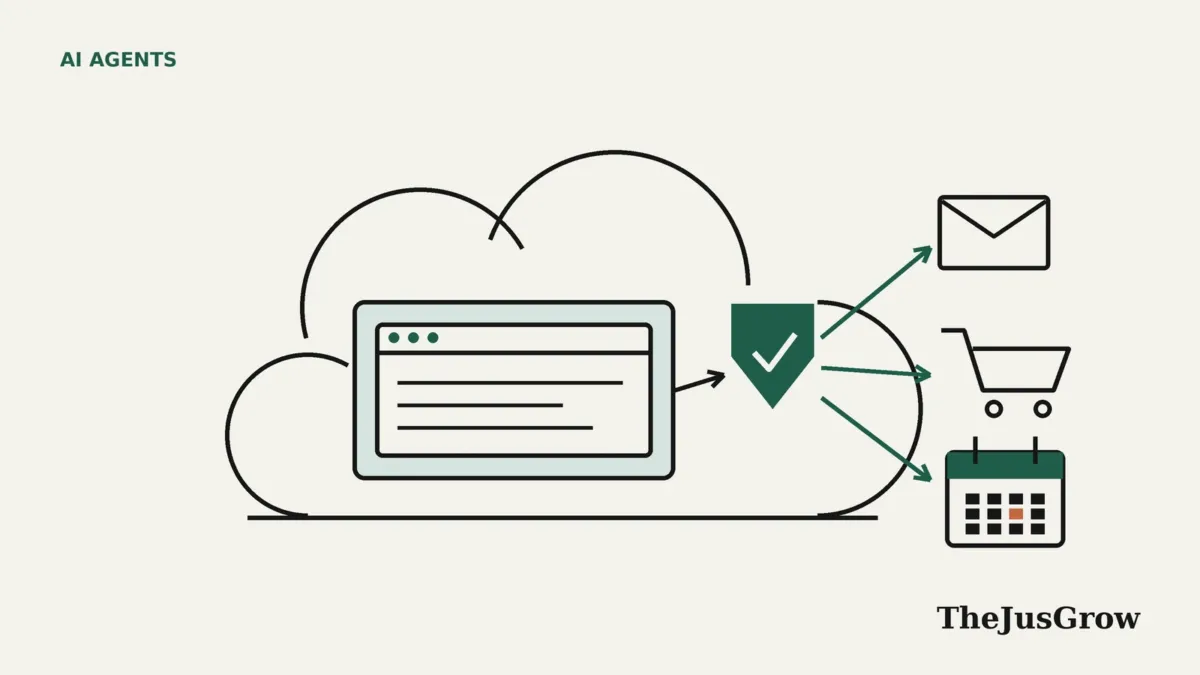
Muse is Meta’s personal AI agent, launched in the US on 8 September 2026 for iOS, Android and the web. Meta says it can send emails, fill in forms, book travel and shop on your behalf, running on a dedicated cloud computer that checks with you before sensitive actions. It has a free tier plus plans at $20 and $100 a month. Amazon has already blocked it from shopping on Amazon.com.
Mark Zuckerberg has framed Meta’s AI ambitions around personal AI that works for individuals. Muse is the first product that tries to turn that idea into something ordinary people can download. Unlike Meta AI, the chatbot built into WhatsApp and Instagram, Muse is meant to carry out tasks: open a browser, fill in a form, send a message, make a purchase.
That makes it one of the most widely available consumer AI agents so far, and also one of the most debated, because it comes from a company whose business is built on advertising. This explainer sets out what Meta says Muse does, what it costs, how its privacy design works and what is still unknown. It is based on Meta’s own announcements and reporting from established news organisations; TheJusGrow has not used Muse for this article.
What is Meta Muse?
Meta describes Muse as “a secure, private personal AI agent that proactively helps people meet their goals”. It runs on a new Meta model called Muse Spark, which the company calls its most capable to date. The difference Meta stresses is that Muse “doesn’t just answer questions, it actually does the work”.
If the difference between a chatbot and an agent is new to you, our guide to what AI agents are covers the basics. In short, an agent is given a goal and access to tools, and it takes several steps on its own to reach that goal.
As of September 2026, Muse is available in the United States on iOS, Android and the muse.ai website. The Associated Press reports that it is limited to people aged 18 and over and can also be reached through WhatsApp. Meta says it is “coming soon” to its AI glasses.
What can Muse actually do?
Meta’s launch announcement lists a broad set of tasks. The table below separates what Meta says Muse can do from the practical questions a careful user should ask.
| Task Meta describes | What to keep in mind |
|---|---|
| Sending emails on your behalf | Meta says Muse checks with you first. Read every draft before approving it. |
| Booking travel and filling out online forms | Forms often ask for personal details. Check what Muse has entered before anything is submitted. |
| Shopping suggestions and completing purchases | Purchases are also meant to need your approval. Some retailers, including Amazon, do not allow it. |
| Negotiating on your behalf | Meta has not published detail on how this works. Treat any agreed deal as something you must confirm. |
| Turning long-term goals into action plans | Plans are suggestions, not professional advice, especially for health, money or legal matters. |
| Proactive suggestions based on what it learns | Useful, but it means Muse is building a picture of you over time. |
Meta also says Muse “remembers what matters to a person”. One example it gives is turning a recipe video saved on Instagram into a grocery list. People can tell Muse to “forget” specific things it has learned. Our separate guide to what AI agent memory stores and how to delete it explains why that control matters.
How much does Muse cost?
Meta’s own announcement says only that Muse is “free for most of what people need”, with subscriptions for people who want to do more. Axios reported the prices at launch: a free tier, a $20-a-month plan and a $100-a-month plan. Alexandr Wang, Meta’s chief AI officer, told Axios that “the vast majority of users should be able to do what they need within the free tier”.
TechCrunch’s coverage of Meta’s Connect event adds that Meta intends to make money by taking a small fee from transactions Muse completes. That matters for shoppers: an agent that earns a fee when you buy something has a commercial interest in purchases happening. It does not mean Muse will push you to buy, but it is worth knowing who benefits from each transaction.
Prices and plan limits are likely to change, so check the current plans in the app before paying.
Where does Muse run, and what can it see?
The most unusual part of Muse is its architecture. Meta says each person’s Muse “runs on its own dedicated computer in the cloud, contained so no one else’s agent can reach it”. The AP describes this as a dedicated, secure virtual machine that holds both the agent and the user’s data. Axios notes that it runs on Meta’s servers and includes a visible built-in browser, so you can watch what it does.
Three other safeguards feature in Meta’s description:
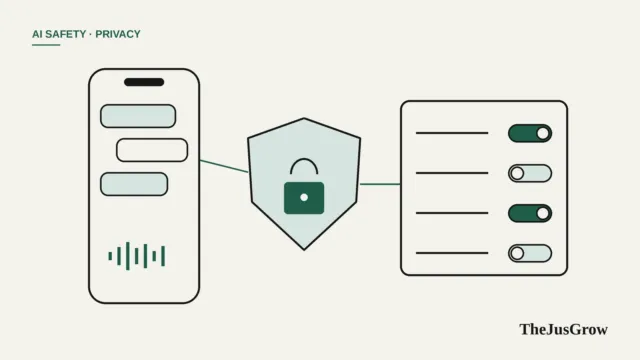
- A separate “Sentinel” agent. Meta says a second agent runs on the same machine but is kept apart from Muse, and “nothing Muse does reaches the internet unless the Sentinel approves it”.
- Confirmation before sensitive actions. Muse is meant to check with you before actions such as sending an email or making a purchase, and to keep “a complete audit trail” of what it has done and plans to do.
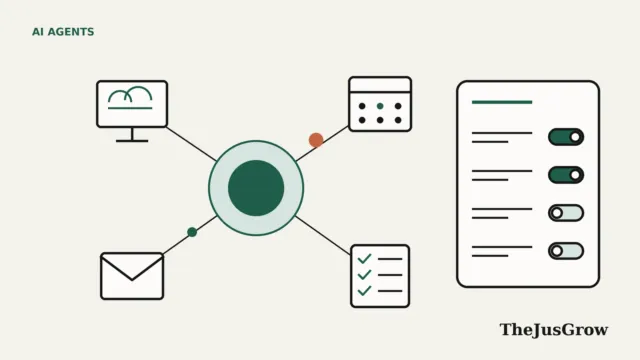
- Choice over connections. You choose which apps Muse connects to and how much access it gets, and can disconnect a service at any time. Axios reports that permissions distinguish between reading and writing.
These are company claims, not independently audited guarantees. They are sensible design choices, and the Sentinel approach in particular is aimed at a known weakness of agents that read the web: prompt injection, where hidden text on a page tries to hijack the agent. No published design fully solves that problem yet.
What does Meta say it does with your data?
Meta makes several specific commitments in its announcement:
- Muse “doesn’t share a person’s conversations or the data in their VM with Meta’s ad systems”.
- Muse “has no visibility into people’s passwords or payment methods”.
- People can opt out of their interactions being used to train Meta’s AI models. Axios reports that training use is on by default, so opting out is something you have to do.
- Later this year, Meta plans a “Muse Confidential VM” in which the whole machine, including conversations, is encrypted with a key only the user holds, “so not even Meta can access it”.
The last point is a promise about a future feature, not something available at launch. Until it arrives, your Muse data sits on Meta’s infrastructure under Meta’s control, even if it is kept away from the ad systems.
Meta also says Muse is the first AI agent covered by Link’s purchase protections, which it describes as including cover for damaged or lost items, price drops and no-fee returns. Check the current terms before relying on that for an expensive purchase.
Why has Amazon blocked Muse?
On 21 September 2026, GeekWire reported that Amazon had cut Muse off from its store, with users seeing an error message when the agent tried to shop there. Amazon said third-party apps that make purchases for customers “should operate openly and respect service provider decisions” about whether to take part. According to GeekWire, Amazon also raised concerns about the agent not identifying itself and about customer credentials.
Muse is not the first agent Amazon has kept out; GeekWire notes similar action against shopping agents from Google, OpenAI and Perplexity. Amazon runs its own agent, which we cover in our explainer on Alexa for Shopping and “Buy for Me”. For shoppers, the practical point is simple: an agent can only shop where retailers let it. Meta has announced partnerships with retailers including Walmart, Best Buy, Gap, Sephora, Ulta and Wayfair, plus Shopify’s catalogue and Instacart for groceries.
What is coming next?
At its Connect event on 24 September, Meta outlined the next stage:
- AI glasses: hands-free Muse that can act on what you are looking at, “in the coming months”.
- An email address for Muse: so it can handle messages you forward to it.
- Mac desktop control: TechCrunch reports Muse will be able to operate Mac applications while you step away.
- Muse Charm: a pocket-sized device for talking to Muse, with more details promised later in 2026.
- More partners: including Notion, GitHub and Box for work tasks, and Expedia for travel (listed as coming soon).
Each of these widens what Muse can touch. An agent that can control your computer or read forwarded email has far more access than one that suggests a grocery list.
Should you try Muse?
That depends on how much access you are comfortable giving any agent, not just Meta’s. If you want to try it, a cautious approach limits the downside:
- Start with low-stakes tasks such as research or lists before connecting email or payment.
- Connect one service at a time, and prefer read-only access where it is offered.
- Opt out of model training if you do not want your interactions used, since Axios reports it is on by default.
- Review the audit trail after each task, and never approve an action you have not read.
- Review what is connected every few weeks.
Muse is new, and Meta’s safeguards have not yet been tested at scale by independent researchers. Our wider guide, are AI agents safe?, applies to Muse as much as to any other agent.
Key takeaways
- Muse is Meta’s personal AI agent, launched in the US on 8 September 2026 on iOS, Android, the web and WhatsApp, for people aged 18 and over.
- Meta says it can send emails, fill in forms, book travel, negotiate and shop, and that it asks before sensitive actions.
- There is a free tier and paid plans at $20 and $100 a month, according to Axios; Meta also plans to take a small fee on transactions.
- Meta says Muse data is kept from its ad systems, but model training is on by default and fully encrypted “Confidential VM” protection is still to come.
- Amazon has blocked Muse from its store, so an agent’s usefulness depends on which retailers allow it.
Meta Muse AI agent: FAQs
There is a free tier plus paid plans at $20 and $100 a month, according to Axios. Meta also plans to take a small fee on transactions.
Not yet. Muse launched in the US on 8 September 2026 for people aged 18 and over, on iOS, Android, the web and WhatsApp.
By default, yes. Model training is switched on unless you turn it off in Settings > Data controls. Meta says Muse data is kept away from its ad systems.
Sources
- Meta Newsroom, “Introducing Muse: The World’s First Personal AI Agent Built for Everyone” (8 September 2026)
- Meta Newsroom, “The Biggest News From Connect 2026” (24 September 2026)
- Axios, “Meta debuts Muse, its long-planned personal AI agent” (8 September 2026)
- Associated Press via PBS News, “Meta launches personal AI agent, Muse, to help with everyday tasks” (8 September 2026)
- TechCrunch, “Everything new coming to Meta’s AI agent Muse” (23 September 2026)
- GeekWire, “Amazon blocks Meta’s Muse AI assistant in new standoff over agentic shopping” (21 September 2026)