AI Shopping Agents: How They Work and What They Can Buy for You
AI can now research, compare and — in some cases — check out for you. But who you're actually buying from, what happens with returns, and which stores allow it are more complicated than the demos suggest.

AI shopping agents: the short answer
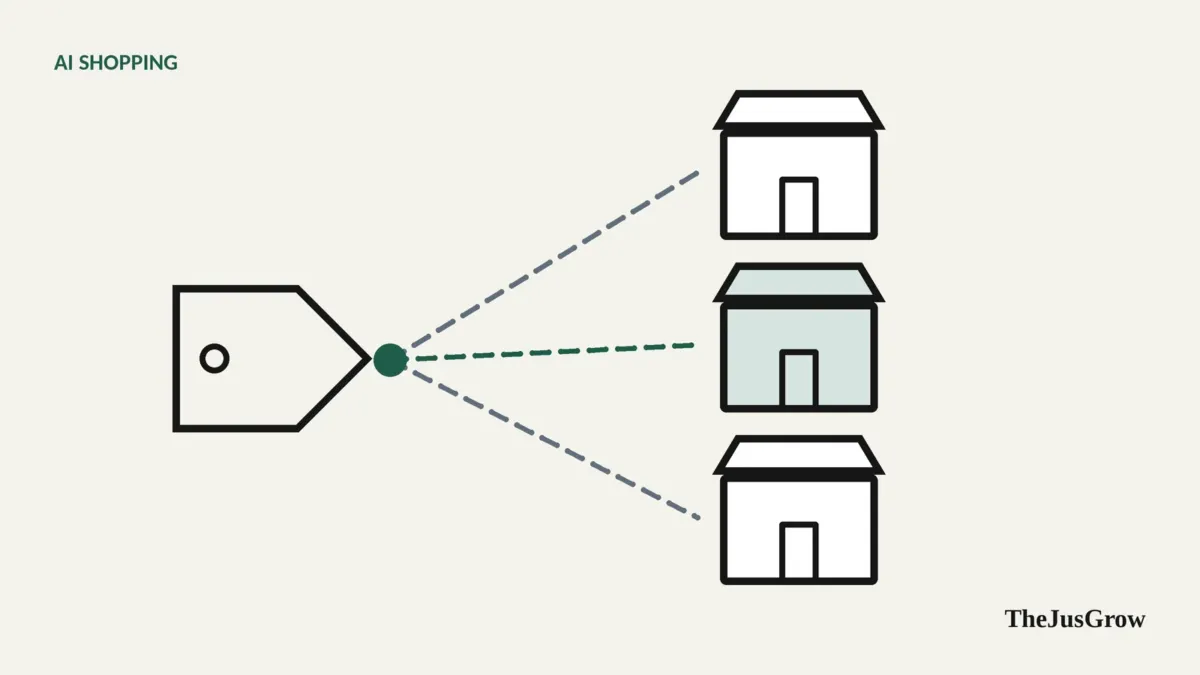
AI shopping agents research products, compare prices and, for a growing but limited set of stores, complete the purchase for you. Most work in one of three ways: they recommend and send you to the retailer; they complete checkout on the retailer’s own site on your behalf (Google’s and Amazon’s “Buy for Me” features); or, less commonly now, they let you pay inside the chat. Availability is mostly US-only and limited to participating merchants.
Shopping is the use case AI companies love to demo: “find me a waterproof jacket under $150 and buy it.” It’s also where the gap between the demo and your actual experience is widest. Understanding how these agents work, and who is responsible when something goes wrong, will save you frustration.
Three ways AI shopping agents work
1. Research and recommend, then hand you off
This is still the most common model. You describe what you want; the agent searches, compares and summarises; you click through and buy on the retailer’s site as normal.
Google’s AI Mode in Search, ChatGPT and most general-purpose agents work like this for most products. The AI does the research; you do the checkout. It’s also the model OpenAI moved towards in March 2026, when it changed course on in-chat purchasing and shifted to having retailers handle checkout through their own apps and sites inside ChatGPT.
2. Check out for you on the merchant’s own site
Here the agent completes the purchase, but on the retailer’s normal website, with the retailer as the seller. Two examples:
- Google’s agentic checkout. Announced in 2025 and rolling out from November 2025 for eligible US merchants. Google named Wayfair, Chewy, Quince and select Shopify merchants at launch. You track a product’s price; when it hits your target, you get a notification with a “buy for me” button; after you confirm payment and shipping details, Google’s agent adds the item to your cart on the merchant’s site and completes checkout with Google Pay.
- Amazon’s Buy for Me. Part of Alexa for Shopping, which replaced Amazon’s Rufus assistant in the US in May 2026. For eligible products found on other retailers’ sites, Amazon says Buy for Me can complete the purchase using your saved Amazon address and payment method.
The key detail: the retailer is still the seller. Returns, delivery problems and warranty claims usually go through that retailer, not through Google or Amazon.
3. Pay inside the chat
In this model, you never visit the store at all. OpenAI launched Instant Checkout in ChatGPT in September 2025 with Stripe, using a new open standard called the Agentic Commerce Protocol. By March 2026 it had changed course, with reporting at the time describing low merchant uptake. The underlying protocols survive, and some startups still build fully in-chat purchasing, but for mainstream consumers the direction of travel in 2026 has been discover in AI, buy on the retailer’s site.
What’s happening behind the scenes
You don’t need to understand the plumbing to shop, but a little context explains why availability is patchy.
For an agent to buy reliably, the store needs to expose accurate product, price and stock data, and there needs to be a trusted way to pass your payment details without handing your card number to the AI. Several competing standards have emerged to do this:
| Standard | Backed by | What it’s for |
|---|---|---|
| Agentic Commerce Protocol (ACP) | OpenAI and Stripe (2025) | Letting AI apps discover products and hand off to checkout |
| Universal Commerce Protocol (UCP) | Google with Shopify and major retailers (announced January 2026) | Product data, carts and checkout across Google’s AI surfaces |
| Agent Payments Protocol (AP2) | Google (2025) | Proving a payment was authorised by a real user, not a rogue agent |
Card networks have also launched programmes so merchants can tell a legitimate shopping agent from a scraper. This is all still settling down, which is a big part of why agentic checkout works only with specific merchants.
What AI agents can buy for you today
Realistically, as of September 2026:
- Everyday products from participating US merchants, via Google’s agentic checkout or Amazon’s Buy for Me.
- Amazon products through Alexa for Shopping, including re-ordering things you’ve bought before.
- Hotel rooms through Google’s AI Mode in the US, which started rolling out hotel booking with partners such as Booking.com, Expedia, Marriott and Hilton in August 2026. (Flights still hand off to partner sites.)
- Almost anything else, with you finishing the checkout, which is often the sensible choice anyway.
And what they generally can’t do:
- Buy from stores that don’t participate or that block automated shoppers.
- Negotiate, haggle or use loyalty perks they don’t have access to.
- Judge fit, feel or quality the way you would in person.
Not every store wants AI shoppers
Retailers are divided. Some welcome agents as a new sales channel; others see them as a threat to their customer relationships and advertising revenue.
eBay updated its user agreement in early 2026, effective 20 February, to prohibit “buy-for-me” agents and automated flows that place orders without human review, according to reporting by The Register and others.
Amazon sued Perplexity in November 2025 over the Comet browser’s AI assistant shopping on Amazon for users. A district court granted Amazon a preliminary injunction in March 2026; on 4 August 2026, the US Court of Appeals for the Ninth Circuit vacated that injunction, reasoning that when a user directs the assistant, it is the user who accesses the site. The case returned to the lower court, and the appeals court stressed its ruling was narrow.
For you, the practical upshot is simple: an agent may work on one store and fail on another, and a store’s terms may prohibit it even if it technically works. If in doubt, finish the purchase yourself.
How to shop with an AI agent safely
Let the agent research; you decide. The comparison work is where agents save the most time with the least risk.
Set a hard price ceiling and a stop point. “Don’t buy anything over $150” and “show me the final basket before paying” should be part of the instruction.
Check the final price at checkout. Taxes, shipping and fees can differ from what the agent saw earlier. Compare the total, not the headline price.
Know who the seller is. If something goes wrong, you’ll deal with the merchant of record. Confirm the return policy before you buy.
Use a payment method with protection. A credit card or a wallet such as Google Pay or Apple Pay generally gives better recourse than a debit card or bank transfer.
Don’t give an agent your card number in chat. Legitimate agent checkouts use saved payment methods or secure handoffs. An agent, or a website, asking you to type card details into a conversation is a red flag.
Watch for injected “deals”. Agents read product pages and reviews written by others. A page could contain hidden instructions designed to steer the agent towards a product or a scam site. Stick to retailers you’d trust anyway. More on this in AI agent scams.
Are AI shopping agents neutral?
Not necessarily, and it’s worth being clear-eyed about this. Amazon’s assistant works inside Amazon’s store and shows sponsored products. Google makes money from shopping ads and has been testing ads in AI Mode. Neither is a disinterested friend. That doesn’t make them useless, it makes them like any other shop assistant: helpful, but working for the store.
For genuinely independent comparison, ask a general-purpose agent to check several retailers and to list its sources, then verify a couple of them yourself. Our guide to whether AI agents can find better prices goes step by step.
Key takeaways
- Most AI shopping still means “AI researches, you buy”; delegated checkout exists for limited, mostly US, merchants.
- With Google’s and Amazon’s “Buy for Me”, the retailer remains the seller, returns go through them.
- OpenAI pulled back from in-chat checkout in March 2026 in favour of retailer-run checkout.
- Some retailers, including eBay, prohibit buy-for-me agents; legal questions are still being settled.
- Set price limits and a confirmation step, check the final total, and never paste card numbers into a chat.
AI shopping agents: FAQs
Some can, within limits. Google and Amazon both offer Buy for Me style features that complete checkout on a retailer’s own site, but availability is mostly US-only and limited to participating merchants. In most cases you still approve the final purchase.
The retailer. With Google’s and Amazon’s Buy for Me features, the store stays the seller, so returns, refunds and delivery issues go through it, not the AI company.
No. They compare more stores than most people would, but they cannot see sign-in-only prices, and results can include commercial placements. Always check the final total, including shipping and return terms, before you approve.
Sources
- Google, “Shop with AI Mode, use AI to buy and try clothes on yourself virtually”
- 9to5Google, “Google rolling out agentic ‘Buy for me’…” (13 November 2025)
- CNBC, “Amazon ditches Rufus chatbot, launches Alexa shopping agent” (13 May 2026)
- CNBC, “OpenAI revamps shopping experience in ChatGPT after struggling with Instant Checkout offering” (24 March 2026)
- The Register, “eBay updates legalese to ban AI-powered shop-bots” (22 January 2026)
- Cooley, “Ninth Circuit Rules on AI Agent ‘Access’ to Third-Party Websites Under CFAA” (6 August 2026)
- TechCrunch, Google AI Mode hotel booking (27 August 2026)