Universal Commerce Protocol (UCP) Explained: What Shoppers Should Know
Google's open standard for AI shopping now has Amazon, Microsoft and Meta on board. Here is what UCP does, how it works and what it changes for shoppers.

In this article
- What is the Universal Commerce Protocol?
- What problem does UCP solve?
- How does the Universal Commerce Protocol work?
- What does UCP look like for shoppers today?
- Who supports the Universal Commerce Protocol?
- Universal Commerce Protocol vs Agentic Commerce Protocol
- What are the risks and limits of UCP?
- How to shop safely with UCP-powered checkout
- Who should care about the Universal Commerce Protocol?
- What to watch next
- Universal Commerce Protocol: FAQs
- Sources
Universal Commerce Protocol: the short answer
The Universal Commerce Protocol (UCP) is an open standard that lets AI agents shop with retailers in a common format. Google launched it in January 2026 with Shopify, Etsy, Wayfair, Target and Walmart. In addition, it covers product search, carts, checkout, account linking and orders. For shoppers, it powers “Buy” buttons in Google’s AI Mode and Gemini, although the retailer still sells you the product.
The Universal Commerce Protocol is one of those pieces of plumbing most people will never see, yet it may shape how they shop. When you ask an AI assistant to find a rain jacket and it offers to buy one without sending you to a website, something has to carry that order to the shop. UCP is Google’s answer to that problem. Since then, a growing list of retailers, payment firms and travel companies now back it.
This guide explains what the standard is, how it works in plain English, who supports it as of September 2026 and what it changes for ordinary shoppers. It also covers the limits, because an open protocol doesn’t make every AI purchase safe or sensible. If you are new to the wider idea, our explainer on what agentic commerce means is a useful starting point.
What is the Universal Commerce Protocol?
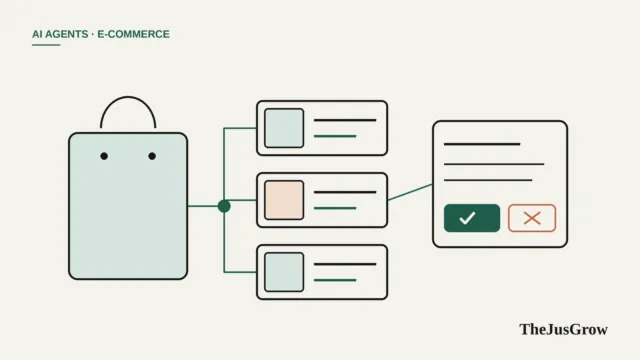
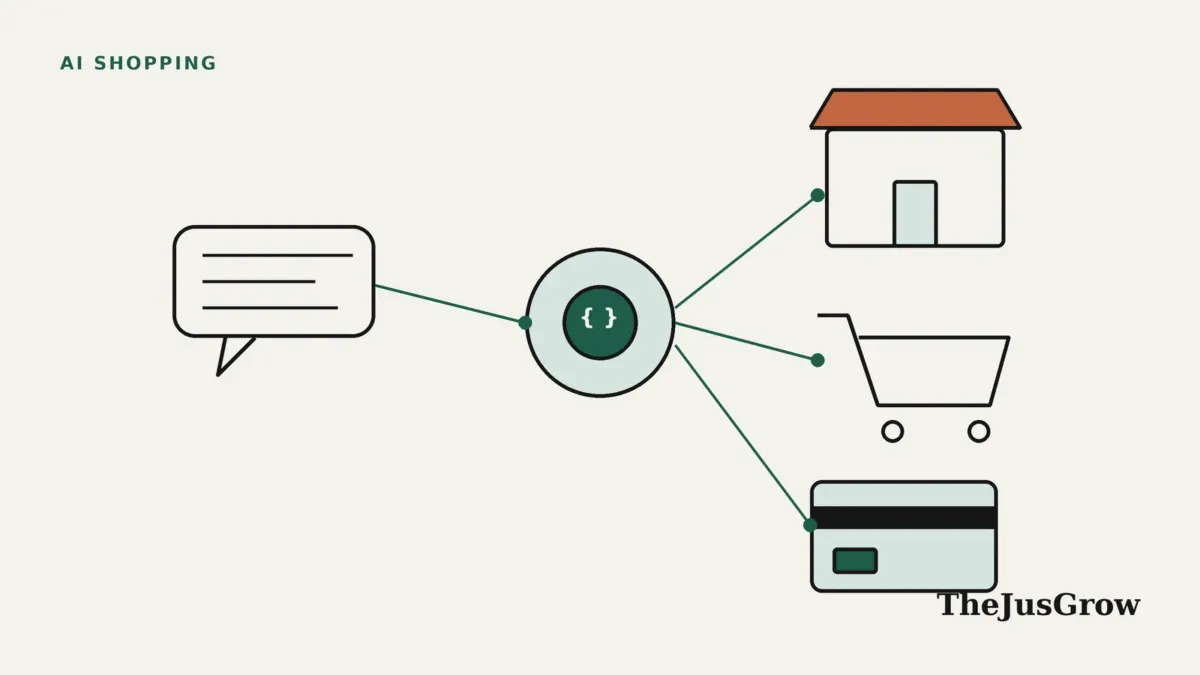
UCP is a shared rulebook for commerce between three parties: the AI agent, the platform it runs on and the business selling something. The project’s official site calls it “the common language for platforms, agents, and businesses”. In practice, that means a retailer describes its products, prices and checkout rules once, in a standard format. Any compatible agent can then read that description and act on it.
Google introduced the Universal Commerce Protocol on January 11, 2026. According to the Google Developers Blog, Google built it with Shopify, Etsy, Wayfair, Target and Walmart. In addition, more than 20 other companies endorsed it at launch, including Adyen, American Express, Best Buy, Mastercard, Stripe, Visa and Zalando.
The code and specification are open source under the Apache License 2.0. So any company can implement it without asking Google for permission. That openness matters, because a shopping standard only works if many shops and many agents adopt it.
What problem does UCP solve?
Google describes the problem as an “N x N integration bottleneck”. Without a standard, every shop would need a custom connection to every AI assistant. Each assistant, in turn, would need a separate integration with every shop. As a result, that approach doesn’t scale beyond a few big partners.
UCP replaces those one-off deals with a single format. For example, a retailer that supports it can, in theory, serve Google’s AI Mode, Gemini and other compatible agents from the same setup. Meanwhile, an agent developer doesn’t have to learn a different checkout system for each store.
For shoppers, the benefit is indirect. In theory, fewer custom integrations should mean more shops appear inside AI assistants, with live stock and prices rather than stale listings. However, the standard alone doesn’t decide which shops take part; retailers still choose whether to join.
How does the Universal Commerce Protocol work?
The protocol has four main ideas. None of them requires technical knowledge to follow, but they explain why an agent can move from “show me options” to “order placed”.
1. Discovery: the shop publishes a menu
First, a business publishes a small machine-readable file at a fixed web address ending in /.well-known/ucp. For instance, this file lists what the business supports, such as checkout or discount codes. An agent reads it and learns what it can do with that shop, without a hard-coded integration.
2. Capabilities: building blocks, not one big system
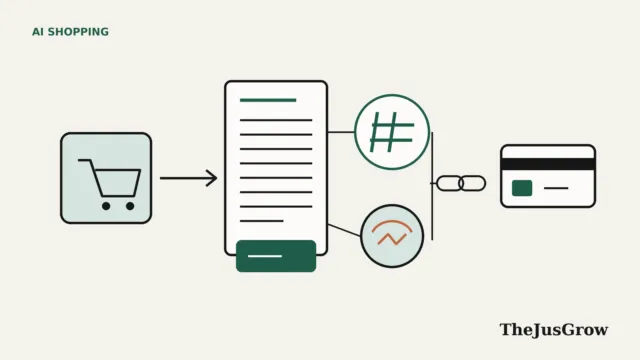
Next, UCP splits shopping into modules that the project calls capabilities. As of September 2026, the official site lists five core ones:
- Catalog: searching and browsing products.
- Cart: building a basket with several items.
- Checkout: handling prices, tax and payment.
- Identity linking: connecting your account with the shop, using OAuth 2.0.
- Order: tracking, fulfilment and returns after purchase.
The site also lists extra capabilities for hotel bookings and food ordering. According to Shopify’s engineering team, merchants “implement only what they need”, and agents “negotiate only what they can handle”. The shop then works out which features both sides support.
3. Transport: several ways to talk
Unlike some older systems, UCP doesn’t force one technical channel. Google’s developer post says it can run over ordinary web APIs (REST), the Model Context Protocol and Google’s Agent2Agent protocol. For payments, Google also designed it to work with the Agent Payments Protocol (AP2), which handles proof that you approved a purchase.
4. Handoff: when a human needs to step in
Finally, the protocol expects that an agent will sometimes need help. Shopify describes a checkout that moves through three states: incomplete, requires escalation and ready to complete. If the shop needs something from you, such as a size choice or extra verification, it provides a “continue” link. As Shopify puts it, you then “pick up exactly where the agent left off”.
What does UCP look like for shoppers today?
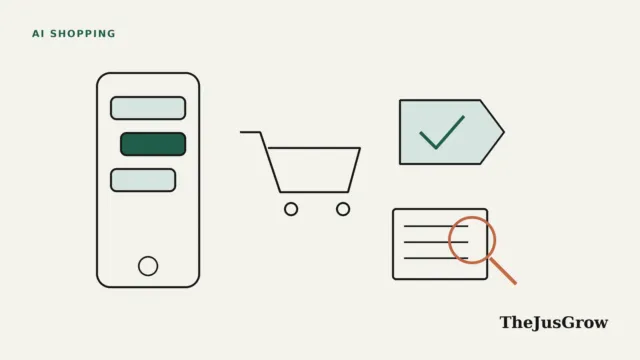
The most visible use of the Universal Commerce Protocol is Google’s own checkout. According to Google’s Merchant Center help page, eligible product listings in AI Mode and Gemini can show a “Buy” button. You then pay through Google Pay, using cards and shipping details already saved in Google Wallet.
Importantly, Google says the retailer remains the “seller of record”. In other words, your contract, receipt, returns and customer service still sit with the shop, not with Google. As of September 2026, Google lists this checkout for select merchants in the United States, Canada and Australia.
Google has also added features on top of the standard. At Google Marketing Live on May 20, 2026, it announced:
- A Universal Cart that saves products from different retailers in one place across Search and Gemini.
- Buy now, pay later options from Affirm and Klarna inside Google Pay.
- Hotel booking directly from AI Mode, plus food delivery ordering through Google Maps.
Google named Nike, Sephora, Target, Ulta Beauty, Walmart and Wayfair among the retailers involved. It also said features would start in the US, with Canada, Australia, the UK, India and New Zealand planned later. We cover the cart feature in more detail in our guide to Google’s Universal Cart.
Who supports the Universal Commerce Protocol?
Support has grown well beyond the launch group. As of September 2026, the official UCP site lists co-developers including Google, Shopify, Etsy, Wayfair, Target, Walmart, Amazon, Microsoft, Meta, Salesforce and Stripe. It also names travel and food companies such as Booking.com, Expedia Group, Hilton, Marriott, DoorDash and Uber Eats.
The endorsers list, however, is longer still. It includes payment firms such as Adyen, Affirm, Klarna, Mastercard, PayPal and Visa, plus retailers like Best Buy, Chewy, Kroger, Lowe’s and Macy’s.
Meanwhile, payment companies are also building on the standard. On September 14, 2026, Worldline announced what it called one of Europe’s first UCP “payment handlers”. According to Worldline, merchants can declare their payment setup once and then accept cards, wallets and European payment methods across compatible AI platforms.
That said, a name on a list is not the same as a live feature. A company can back a standard while it still limits which agents may use its store. For example, Amazon appears as a co-developer, yet it has blocked Meta’s Muse agent from shopping on its site. Support shows direction, not a guarantee that any agent can buy anything.
Universal Commerce Protocol vs Agentic Commerce Protocol
Of course, UCP isn’t the only shopping standard. In September 2025, Stripe and OpenAI released the Agentic Commerce Protocol (ACP), which powers Instant Checkout in ChatGPT. Both are open source, and both keep the merchant in charge of the sale. Still, they come from different camps and focus on different things.
| Universal Commerce Protocol (UCP) | Agentic Commerce Protocol (ACP) | |
|---|---|---|
| — | — | — |
| Launched | January 2026 | September 2025 |
| Led by | Google, with Shopify and major retailers | Stripe and OpenAI |
| Main consumer surface | Google AI Mode and Gemini | ChatGPT |
| Scope | Catalog, cart, checkout, identity linking, orders | Mainly checkout and secure payment tokens |
| Licence | Apache 2.0 | Apache 2.0 |
| Payments | Works with AP2 and payment handlers | Shares a secure payment token with the merchant |
Notably, Stripe appears in both projects. As a result, many large merchants may end up supporting more than one standard, much as shops accept several card networks today. For consumers, the practical question is simpler: which assistant do you use, and which shops does it reach?
What are the risks and limits of UCP?
A standard makes AI shopping easier to build. However, it doesn’t remove the usual risks of letting software act for you. Here is what the Universal Commerce Protocol does and doesn’t change.
- It doesn’t pick the best deal. The agent still decides which products to show, and paid placements such as Google’s Direct Offers can appear in AI Mode.
- It doesn’t replace your judgement. You should still check the size, seller, delivery date and total before approving.
- It doesn’t stop scams on its own. For example, a fake shop could publish a valid-looking file, so trust signals still matter.
- Also, it doesn’t change consumer law. Instead, your rights to refunds and returns come from the retailer and local rules, not the protocol.
Another concern is prompt injection, where hidden text on a page tries to steer an agent. UCP’s structured data may reduce reliance on scraping web pages, but no standard removes this risk entirely. Our guide to prompt injection explains the basics.
How to shop safely with UCP-powered checkout
So if you see a “Buy” button inside an AI assistant, a short routine keeps you in control. None of these steps takes long.
- Check who the seller is before you pay; it should be a retailer you recognise.
- Read the order summary, including delivery costs, taxes and the returns window.
- Confirm which card or buy now, pay later option the checkout will use.
- Keep the confirmation email, because the retailer handles any later problems.
- Review linked accounts now and then, and remove shops you no longer use.
For the last step, our guide to reviewing apps connected to your accounts walks through the process.
Who should care about the Universal Commerce Protocol?
For now, most shoppers don’t need to do anything. You will simply notice more “Buy” options inside AI assistants over time, mainly in Google products at first. Even so, knowing the name helps you understand what is happening behind that button.
Small online shops should pay closer attention. If you sell through Shopify or a major payment provider, support may arrive through those partners rather than through your own coding. Google’s merchant documentation describes an early access programme with eligibility requirements, so check with your platform before assuming you qualify.
Finally, developers and product teams building shopping agents have the most direct reason to learn it. After all, a single standard could spare them dozens of custom integrations.
What to watch next
Three things will show whether UCP becomes a real default. First, watch whether non-Google assistants start using it for live checkout. Second, look for expansion beyond the US, Canada and Australia, which Google has already promised. Third, watch how refunds and disputes work in practice, because that is where shoppers will decide whether to trust it.
In the meantime, we will update this explainer as the specification and consumer features change.
Key takeaways
- The Universal Commerce Protocol is an open, Apache 2.0 standard that lets AI agents search, add to cart, check out and track orders with businesses.
- Google launched it on January 11, 2026 with Shopify, Etsy, Wayfair, Target and Walmart; as of September 2026, co-developers also include Amazon, Microsoft and Meta.
- Its most visible use is Google Pay checkout in AI Mode and Gemini, where the retailer remains the seller of record.
- UCP competes and overlaps with the Agentic Commerce Protocol from Stripe and OpenAI, which powers checkout in ChatGPT.
- A standard doesn’t guarantee good deals or safety, so check the seller, total and returns before you approve a purchase.
Universal Commerce Protocol: FAQs
No. Google launched it, but the specification is open source under the Apache 2.0 licence, and any agent or business can implement it. As of September 2026, co-developers listed on the official site include Shopify, Amazon, Microsoft, Meta and Salesforce.
Google’s Merchant Center help lists UCP-powered checkout for select merchants in the United States, Canada and Australia as of September 2026. Google has said it plans to expand some features to the UK, India and New Zealand.
Google says the retailer remains the seller of record for UCP-powered checkout. That means returns, refunds and customer service normally go through the retailer, under its policy and your local consumer law.
No. UCP covers the whole shopping journey, from product search to orders. The Agent Payments Protocol (AP2) focuses on proving that a person authorised a payment, and UCP works alongside it.
Sources
- Google Developers Blog, “Under the Hood: Universal Commerce Protocol (UCP)” (January 11, 2026)
- Google, “New tech and tools for retailers to succeed in an agentic shopping era” (January 11, 2026)
- Universal Commerce Protocol, official project site (accessed September 2026)
- Shopify Engineering, “Building the Universal Commerce Protocol” (January 11, 2026)
- Google Merchant Center Help, “About the Universal Commerce Protocol (UCP) and UCP-powered checkout feature on Google” (accessed September 2026)
- Google, “How we’re helping retailers thrive with new Universal Commerce Protocol features and AI tools on Google” (May 20, 2026)
- Worldline, “Worldline enables agentic commerce payments via Universal Commerce Protocol capabilities” (September 14, 2026)
- Stripe, “Developing an open standard for agentic commerce” (September 29, 2025)