WebMCP Browser Support in 2026: Chrome, Edge, ChatGPT, Firefox and Safari
Which browsers and AI agents can use WebMCP today? A clear tracker of trials, flags and vendor positions, and what patchy support means for users and site owners.

In this article
- WebMCP browser support at a glance
- What do “origin trial” and “flag” mean?
- Google Chrome: the most advanced WebMCP browser support
- Microsoft Edge: WebMCP browser support close behind
- Brave: experimental support in Leo
- ChatGPT’s desktop browser: the first big consumer rollout
- Firefox: no WebMCP browser support yet
- Safari: WebKit is opposed
- What WebMCP browser support means for users
- What it means for website owners
- When will WebMCP be on by default?
- WebMCP browser support: FAQs
- Sources
WebMCP browser support: the short answer
As of September 2026, WebMCP browser support is limited and experimental. Chrome runs an origin trial from version 149, Edge has one in version 150, and Brave has experimental support in its Leo assistant. ChatGPT’s desktop app also supports WebMCP in its built-in browser. However, Firefox has no implementation, Mozilla’s position is neutral, and Apple’s WebKit team, which makes Safari, opposes it.
WebMCP browser support is the first thing to check before you build anything with this new standard. After all, a tool that no browser can see is useless. The good news is that support has grown quickly in 2026. The less good news is that it is still experimental almost everywhere, and two major browser makers have serious doubts.
This tracker sets out where each browser and AI agent stands, what “origin trial” and “flag” actually mean, and what that means for users and site owners. It is based on the official WebMCP implementation status page, browser documentation and company announcements, checked in late September 2026. Because this changes fast, check the sources below before relying on any detail.
WebMCP browser support at a glance
| Browser or agent | Status (September 2026) | What that means |
|---|---|---|
| Google Chrome | Origin trial from Chrome 149; testing flag | Sites can opt in to test with real visitors |
| Microsoft Edge | Origin trial in Edge 150 | Mirrors Chrome’s platform support |
| Brave | Experimental support in Leo | Limited, early integration |
| ChatGPT desktop app | Supported in the built-in browser as “site tools” | Live for many users since August 25, 2026 |
| Mozilla Firefox | No implementation; position neutral | Mozilla has open questions |
| Apple Safari (WebKit) | No implementation; position opposed | WebKit objects to the design |
If you’re new to the topic, start with our explainer on what WebMCP is. Then come back here for the browser detail.
What do “origin trial” and “flag” mean?
These two terms appear in almost every WebMCP article, so it helps to understand them.
A flag is a hidden setting in the browser. Developers switch it on to test features on their own computer. For example, Chrome’s documentation tells developers to enable WebMCP for local testing at chrome://flags/#enable-webmcp-testing. Ordinary visitors won’t have this switched on.
An origin trial is different. A website registers with the browser maker and receives a token. Then it adds that token to its pages. As a result, visitors to that site get the feature, even though it isn’t switched on for the web as a whole. Google’s origin trial documentation says trials are “limited in duration and usage,” and tokens expire.
So when we say Chrome’s WebMCP browser support is in an origin trial, we mean this: sites that sign up can use it with real visitors, while everyone else waits.
Google Chrome: the most advanced WebMCP browser support
Chrome has done the most work so far, so its WebMCP browser support is the best documented. VentureBeat reported an early preview behind a flag in Chrome 146 Canary in February 2026. By August 2026, Chrome’s WebMCP documentation listed an origin trial “from Chrome 149”.
Chrome also sets some rules. First, WebMCP only works in origin-isolated pages. Second, a “tools” permissions policy controls it, and it defaults to the page’s own origin. Third, cross-origin iframes need the allow="tools" attribute. These rules limit which code on a page can offer tools.
In addition, Google publishes a developer extension called Model Context Tool Inspector. Its Chrome Web Store page lists version 1.9.16, updated September 22, 2026, with about 20,000 users. It requires Chrome 150.0.7861.0 or later with the testing flag on. We explain how developers use it in our WebMCP best practices guide.
Microsoft Edge: WebMCP browser support close behind
Microsoft co-created WebMCP, so Edge support made sense. According to the project’s implementation status page, “an Origin Trial is live in Edge 150.” PiunikaWeb also reported that a September 21, 2026 post on Microsoft’s Edge developer blog introduced experimental WebMCP support.
Edge uses the same Chromium engine as Chrome. As a result, its WebMCP browser support largely mirrors Chrome’s. Sites that test in Chrome should behave in much the same way in Edge.
Brave: experimental support in Leo
Brave is another Chromium-based browser. The implementation status page says experimental WebMCP support “is added to Leo AI chat,” Brave’s built-in assistant. However, this is early work. A Brave code change opened on GitHub on September 25, 2026 carries the title “Disable WebMCP until we’re ready to ship it,” and describes it as a Nightly-only feature so far. So treat Brave support as a preview, not a feature you can rely on.
ChatGPT’s desktop browser: the first big consumer rollout
Strictly speaking, ChatGPT isn’t a browser maker. Still, it matters more than most for WebMCP browser support today. On August 25, 2026, OpenAI added what it calls “site tools” to the built-in browser in the ChatGPT desktop app.
OpenAI’s help page says site tools are “currently available only in the ChatGPT desktop app’s built-in browser, not in Chrome.” Its developer notes add some limits. For example, it supports JavaScript-registered tools but not the declarative HTML form approach. It also doesn’t discover tools inside iframes. Site tools aren’t available in Enterprise or Edu workspaces. Our guide to ChatGPT site tools explains how they work for users.
Firefox: no WebMCP browser support yet
Mozilla hasn’t implemented WebMCP, so Firefox offers no browser support for it today. In its public standards position, it has taken a neutral stance. Mozilla says the proposal “opens a surface whose real-world dynamics leave too many open questions to wholeheartedly endorse.”
Its concerns include sites planting prompt injections that are “invisible to typical users” and collecting data from agent inputs. Mozilla also criticised the name, since “there is no MCP here.” Interestingly, it said it preferred the JavaScript-based approach to the HTML form approach. A Bugzilla entry tracks the work, but there is no public timeline.
Safari: WebKit is opposed
Apple’s WebKit team, which builds the engine behind Safari, has taken the strongest position. In its standards position on GitHub, WebKit marks its stance as opposed.
WebKit’s main argument is about accessibility. It says a separate layer for agents could mean “richer, actionable semantics reach agents while screen-reader and keyboard users get less.” Instead, it believes the gaps should be fixed in HTML and ARIA, which help everyone. WebKit also raises security concerns and argues that WebMCP belongs with the WHATWG and W3C accessibility groups. Therefore, don’t expect WebMCP browser support in Safari soon.
What WebMCP browser support means for users
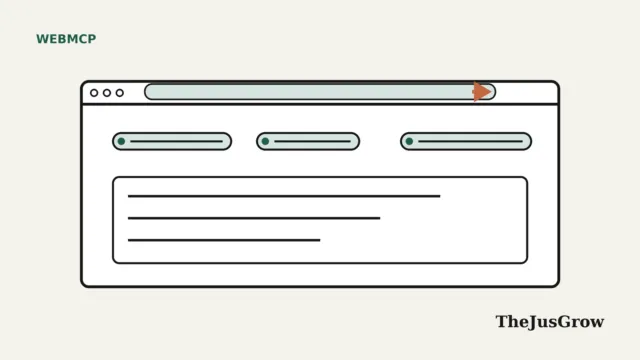
For most people, limited WebMCP browser support means nothing changes yet. You won’t see WebMCP in everyday Chrome or Edge unless a site you visit is in the trial and you are using a supporting agent. The most visible example today is ChatGPT’s desktop browser, which shows an arrow in the address bar when a site offers tools.
However, the gap between browsers matters. If WebMCP becomes common in Chromium browsers but not Safari, iPhone users may get a different experience from Android and desktop users. That is a real possibility, given WebKit’s position.
What it means for website owners
If you run a website, patchy WebMCP browser support shapes your plans in three ways:
- Treat it as an extra. Your site must keep working normally for every visitor. WebMCP tools should sit on top of a working page, never replace it.
- Test in more than one place. A tool that works in Chrome might behave differently in ChatGPT’s browser. For example, ChatGPT doesn’t support the declarative API.
- Expect change. The API has already moved from
navigator.modelContextin early 2026 todocument.modelContextin current documentation. So keep your code easy to update.
Some platforms already handle this for you. Shopify switched on WebMCP tools for Liquid storefronts in August 2026, while noting that agent support “is currently limited to Chromium-based browsers through an origin trial.” Our guide to Shopify WebMCP covers that rollout.
When will WebMCP be on by default?
Nobody has announced a date. An origin trial is a testing stage, not a launch. Chrome would still need to ship it by default, and the draft specification is still changing.
That said, the pace in 2026 has been fast. The idea went from an explainer in August 2025, to a flag in February 2026, to origin trials in Chrome and Edge and a ChatGPT launch by August 2026. We’ll update this tracker as things change. Meanwhile, the WebMCP security guide explains why browser makers are moving carefully.
Key takeaways
- WebMCP browser support is experimental: Chrome (origin trial from 149), Edge (origin trial in 150) and Brave (Leo, experimental).
- ChatGPT’s desktop app supports WebMCP as “site tools” in its built-in browser, but only for JavaScript-registered tools.
- Firefox has no implementation and Mozilla’s position is neutral; Apple’s WebKit team, behind Safari, opposes it.
- An origin trial lets registered sites test with real visitors; it is not a full launch.
- Site owners should treat WebMCP as an extra layer and expect the API to keep changing.
WebMCP browser support: FAQs
As of September 2026, Chrome and Edge support it through origin trials, Brave has experimental support in Leo, and ChatGPT’s desktop browser supports it as site tools. Firefox and Safari do not.
No. Apple’s WebKit team has taken an opposed standards position, citing accessibility and security concerns.
Developers can enable the chrome://flags/#enable-webmcp-testing flag for local testing. Sites can also join the origin trial so real visitors get the feature.
Not in a mainstream web browser as of September 2026. ChatGPT’s desktop browser uses it for site tools, but Chrome and Edge are still in trial.
Sources
- webmachinelearning, “Implementation status” (accessed September 2026)
- Chrome for Developers, overview page (updated August 7, 2026)
- Chrome for Developers, “Get started with origin trials” (accessed September 2026)
- Chrome Web Store, “Model Context Tool Inspector” (updated September 22, 2026)
- VentureBeat, “Google Chrome ships WebMCP in early preview” (February 12, 2026)
- PiunikaWeb, “Microsoft Edge wants to help AI bots fill out forms and click buttons” (September 22, 2026)
- Brave, “[AI Chat]: Disable WebMCP until we’re ready to ship it”, pull request #40220 (September 25, 2026)
- OpenAI Help Center, “Using site tools in the ChatGPT desktop app” (2026)
- ChatGPT Learn, “Site tools” developer guide (accessed September 2026)
- Mozilla, standards position issue #1412 (accessed September 2026)
- WebKit, standards position issue #670 (accessed September 2026)
- Shopify, “WebMCP support for Liquid and Hydrogen storefronts” (August 5, 2026)