AI Travel Agents: Can AI Really Plan an Entire Trip?
AI can now draft an itinerary in seconds and, in some places, book the hotel too. Whether it can handle the whole trip — including the parts that go wrong — is a different question.

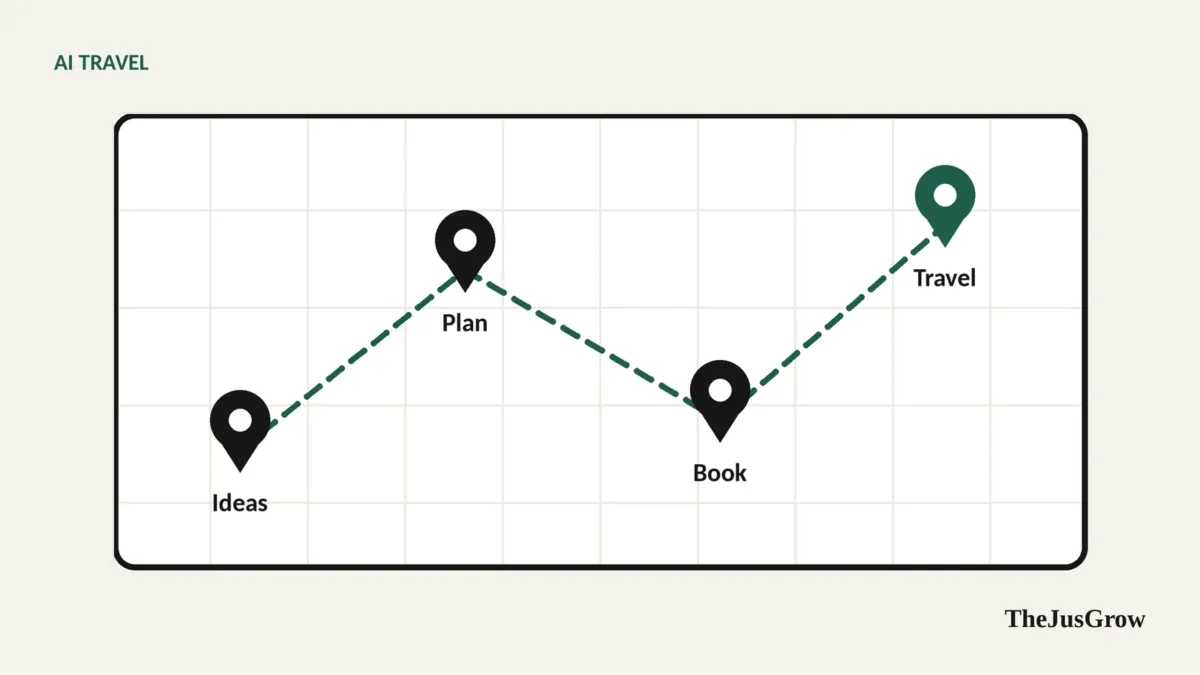
AI travel agents: the short answer
AI can plan most of a trip well: suggesting destinations, drafting day-by-day itineraries, comparing flights and hotels, and checking logistics. Booking is partly there. Google began rolling out hotel booking inside AI Mode in the US in August 2026, and apps from Booking.com and Expedia run inside ChatGPT, but flights usually still hand off to airline or travel sites. What AI can’t yet do is take responsibility: handle disruptions, guarantee entry rules are current, or make judgement calls about what you’ll enjoy.
Travel planning is one of the most common things people ask AI to help with, and it’s easy to see why. A good trip involves dozens of small decisions spread across many websites, exactly the kind of work agents are built for. But a trip isn’t a spreadsheet. It’s a sequence of commitments with money attached, and when something breaks at 11pm in an unfamiliar airport, what matters is who can fix it.
A trip, stage by stage: what AI can do today
| Stage | What AI does well | Where it struggles |
|---|---|---|
| Inspiration | Suggesting places that fit your budget, season and interests; explaining trade-offs between destinations | Generic suggestions if your request is vague; over-representing popular spots |
| Itinerary drafting | Day-by-day plans, grouping sights by area, estimating travel time | Opening hours, seasonal closures and events that have changed since its information was gathered |
| Flight research | Comparing routes, times and total journey length; price tracking | Fare rules, baggage fees and seat costs buried in booking flows; real-time availability |
| Accommodation | Filtering by location, price, rating and cancellation terms; comparing totals | Noise, neighbourhood feel, how “10 minutes’ walk” works with luggage |
| Booking | Hotels in some places (see below); handing off to partners for flights and activities | Complex multi-city bookings; anything requiring identity checks |
| Paperwork | Summarising entry requirements, with links | Accuracy, rules change and vary by passport; always check official sources |
| During the trip | Translating, finding restaurants nearby, re-planning a rainy day | Rebooking after disruption; phoning a hotel; anything needing authority |
| After the trip | Drafting a complaint or a compensation claim letter | Pursuing the claim for you |
What’s changed in 2026
A few developments have moved AI from “travel chatbot” towards “travel agent”:
Hotel booking inside Google Search. In August 2026 Google started rolling out hotel booking in AI Mode for US users in English. You can find, compare and book a hotel in the conversation and pay with Google Pay, while the hotel or travel site remains the merchant responsible for the booking, changes and support. Launch partners included Booking.com, Expedia, Hilton, Marriott, IHG, Choice Hotels, Wyndham, Priceline, Hotels.com and Trip.com, according to Google’s announcement as reported by TechCrunch and Skift. Flight booking was not included; AI Mode can compare and track flight prices, then sends you to a partner to book.
Points and miles. At the same time, Google said AI Mode can show flight and hotel prices in loyalty points or miles for participating programmes, a surprisingly practical feature for anyone juggling rewards.
Travel companies inside chatbots. OpenAI opened ChatGPT to third-party apps in October 2025, with Booking.com and Expedia among the first partners. You can search their inventory in conversation, but booking completes with the travel company.
Personal agents with access to your email. Agents such as Gemini Spark (where available) and ChatGPT Work can read confirmation emails and build an itinerary from them, or add bookings to your calendar.
So can AI plan an entire trip?
It can plan one. For a straightforward trip (one destination, standard flights, a hotel, some sightseeing) an AI agent can produce a sensible, well-organised plan in minutes, and a careful traveller can turn that into a real trip in an hour or two instead of an evening.
It can partly book one. Depending on where you live, it may book your hotel; it will probably hand you off for flights, trains and activities. That’s not a bad thing: booking directly with the airline or through a reputable agency usually gives you clearer rights when things go wrong.
It can’t own one. A human travel agent, or you, carries responsibility. When a flight is cancelled, someone has to know your options, weigh them, and act quickly. Consumer AI agents in 2026 don’t hold bookings in their own name, can’t sit on hold with an airline, and can’t be held accountable for bad advice. For complex trips (multiple countries, tight connections, travellers with specific medical or accessibility needs), a human expert is still worth paying for.
AI agent, booking site or human travel agent?
Most trips now involve some mix of the three. Here’s how they compare on the things that matter when you’re choosing how to plan.
| AI agent | Online travel agency or booking site | Human travel agent | |
|---|---|---|---|
| Speed of first plan | Minutes | You do the planning | Days, usually |
| Personalisation | Good if you brief it well | Filters only | Excellent, based on conversation and experience |
| Price comparison | Across many sites, if it can load them | Within its own inventory | Varies; may access trade rates |
| Booking | Hotels in some places; otherwise hands off | Yes | Yes |
| Help when things go wrong | Can draft messages; can’t act for you | Customer service, of varying quality | A named person working for you |
| Accountability for advice | None in practice | Limited to its own bookings | Professional, and often backed by industry schemes in some countries |
| Cost to you | Your AI subscription | Usually built into prices | Fees or commission, depending on the agent |
The sensible combination for many independent travellers: use an AI agent to explore and shortlist, book through a reputable provider (or directly with the airline and hotel), and keep a human expert for trips where the stakes justify it.
The biggest risks with AI travel planning
Outdated or invented details. Language models can state opening hours, ferry schedules or visa rules with total confidence and be wrong. For anything that could ruin a day, or get you refused boarding, check the official source.
Totals that aren’t totals. Hotel prices often exclude city taxes or resort fees; airfares often exclude bags and seats. Ask the agent to show what’s included, then confirm at checkout.
Cancellation terms. “Free cancellation” usually has a deadline. Ask the agent to record the exact deadline for each booking and add it to your calendar.
Phishing that looks like travel admin. Fake “your booking needs confirming” messages are a long-running scam. An agent that reads your inbox could be targeted with similar messages. Never let an agent enter payment details on a page reached from an unexpected email. Our guide to AI agent scams explains the pattern.
Who should use AI to plan travel, and how
Great fit: independent travellers comfortable booking online, who want a faster first draft and better comparisons.
Good with care: families and groups, if you use AI for options and logistics and keep decisions human.
Use a human expert: complicated multi-country trips, trips with serious medical or accessibility requirements, and anything where a missed connection would be very costly.
For a practical walkthrough (prompts, checks and when to book) see how to use AI agents to plan a vacation.
Key takeaways
- AI is strong at inspiration, itineraries and comparing flights and hotels.
- Google began rolling out hotel booking in AI Mode in the US in August 2026; flights still hand off to partners.
- Always confirm entry rules, opening times and full prices at official sources.
- AI agents can’t take responsibility during disruptions, keep your own copies, deadlines and contacts.
- Complex or high-stakes trips still justify a human travel expert.
AI travel agents: FAQs
Not fully in most cases. Google AI Mode can compare and track flights, but booking still hands off to airlines or travel sites. Hotels are further along: Google began rolling out hotel booking inside AI Mode in the US in August 2026.
For research, comparisons and itineraries, AI is fast and cheap. For complex trips, disruptions and judgement calls, a human expert still wins, because an AI tool cannot take responsibility when things go wrong.
Entry and visa rules, opening times, full prices including fees, and cancellation deadlines. Check each at the official source, and keep your own copies of confirmations and contacts.
Sources
- TechCrunch, “Google’s AI Mode can now track flight prices, help book hotels, and more” (27 August 2026)
- Skift, “Google’s Agentic Hotel Booking Tool Comes to AI Mode” (27 August 2026)
- Google, “Explore new ways to plan and book travel with AI in Search”
- PhocusWire, “Hotel, flight bookings coming to Google’s AI Mode” (November 2025), on ChatGPT apps with Expedia and Booking.com
- Google, Gemini Apps Help, “Use Gemini Spark”