AI Flight Price Tracking: How Google AI Mode Watches Fares for You
Google's AI Mode can now track fares from more than 300 airlines when you ask. Here is how it works, what Google's booking data says and where the limits are.

In this article
- What is AI flight price tracking?
- What did Google launch in August 2026?
- How AI flight price tracking works in Google AI Mode
- Google Flights alerts vs AI flight price tracking
- When should you book? What Google’s data says
- What AI flight price tracking can’t do
- Points and miles: a related new trick
- A simple routine for using AI flight price tracking
- Common mistakes with AI flight price tracking
- Who should use AI flight price tracking?
- AI flight price tracking: FAQs
- Sources
AI flight price tracking: the short answer
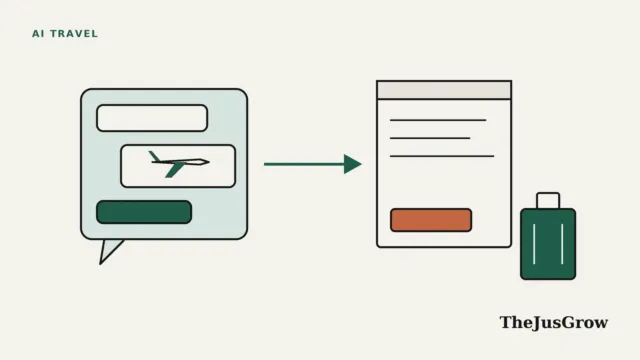
AI flight price tracking lets you ask an assistant to watch fares for you in plain English. Since August 27, 2026, Google’s AI Mode can do this: you describe a trip, then say “track these flight prices for me”, and Google emails you when fares change. It draws on more than 300 airlines and travel sites and works in over 180 countries, though not in the EEA.
AI flight price tracking has moved from a niche trick to a mainstream search feature. For years, Google Flights has let you switch on price alerts for a route. Now Google has built that into AI Mode, its conversational search, so you can plan and track a trip in one chat.
This guide explains how the new feature works, what the numbers say about when to book, and where AI tracking helps or falls short. It is based on Google’s own documentation and data, checked in September 2026. We haven’t tested the feature for this article. For the wider picture of AI trip planning, see our guide to AI travel agents.
What is AI flight price tracking?
It is a price alert that you set up by talking, instead of by clicking through filters. You tell an AI assistant where and when you want to fly. Then it finds options, and you ask it to keep watching the fares.
The difference from older alerts is mainly convenience. With a classic alert, you pick exact airports and dates in a form. With AI flight price tracking, you can describe a trip loosely, refine it in conversation and then start tracking from the same chat.
However, the data behind it is broad. Google says AI Mode’s flight results draw on more than 300 partner airlines and travel sites.
What did Google launch in August 2026?
On August 27, 2026, Google announced three travel updates for AI Mode in Search. According to Google’s announcement, they were:
- Flight price tracking by request, in more than 180 countries and territories.
- Hotel booking inside AI Mode, starting in the US in English.
- Points and miles prices for flights and hotels with selected loyalty programs.
Google says the travel features aren’t available in countries and territories of the European Economic Area. TechCrunch described the update as moving AI Mode toward being “an AI travel agent of sorts”. We covered the hotel side in our guide to booking hotels in Google AI Mode, so this article focuses on flights.
How AI flight price tracking works in Google AI Mode
The process takes a few minutes. Here is the flow Google describes.
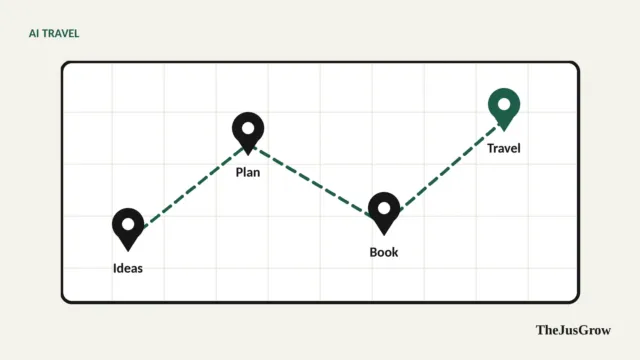
- Open AI Mode in Google Search and describe your trip, including cities, rough dates and preferences such as nonstop flights.
- Review the options AI Mode shows, with current prices.
- Ask it to watch the fares, for example: “track these flight prices for me”.
- Wait for emails, because Google says it notifies you when prices change for those dates and destinations.
- Book through the airline or travel site when the price suits you.
You can phrase the request naturally. For example:
Find nonstop flights from Chicago to Lisbon leaving around May 14 and returning around May 24, then track the prices for me.
Compare morning flights from Dallas to Denver on the Friday before Thanksgiving, and alert me if the cheapest fare drops.
In short, AI Mode handles the search and the alert in one place. Still, it doesn’t buy the ticket for you.
Google Flights alerts vs AI flight price tracking
Classic Google Flights tracking still exists, and it offers a few extra controls. According to Google’s Travel Help pages, you can track a specific route and date or choose “Any dates” for flexible trips.
| Feature | Google Flights price tracking | AI Mode flight price tracking |
|---|---|---|
| — | — | — |
| How you set it up | Toggle “Track prices” on a search | Ask in a conversation |
| Flexible dates | “Any dates” option with regular emails | Depends on how you describe the trip |
| Alerts | Email when prices drop significantly, or are likely to rise | Email when prices change |
| Where it works | Google Flights | AI Mode in 180+ countries, not the EEA |
| Stop tracking | Tracked flights page, then Remove | Not detailed in Google’s announcement |
Google Flights also offers price insights. Google says it can estimate how much prices are likely to rise and show its confidence in that estimate. Those are predictions, not promises, and the help page says so plainly.
When should you book? What Google’s data says
AI flight price tracking tells you when prices move. Timing tells you when to start watching. Google has published booking-window data based on Google Flights prices, and it offers useful benchmarks.
In its 2025 holiday travel analysis, which looked at data from 2021 to 2025, Google said:
- Domestic flights were cheapest, on average, about 39 days before departure, within a range of 23 to 51 days.
- International flights were cheapest 49 or more days ahead.
- Thanksgiving flights were cheapest around 35 days out, and Christmas flights around 51 days out.
- Tuesday was the cheapest day to book, but only by 1.3% compared with Sunday.
- Flying Monday to Wednesday cost about 13% less than weekend travel.
- A layover saved roughly 22% compared with a nonstop flight.
These are averages across many routes. So your route may behave differently, which is exactly why a tracker is useful. As a practical rule, start tracking a few weeks before the typical booking window opens.
What AI flight price tracking can’t do
AI flight price tracking is useful, but its limits are important. Here is what it doesn’t do, based on Google’s documentation.
- It doesn’t book or hold a fare. You still buy the ticket through the airline or a travel site.
- It doesn’t guarantee a lower price. Alerts report changes; they can’t make fares fall.
- It doesn’t cover the EEA. Google lists the travel features as unavailable there.
- It doesn’t judge total cost for you. Bag fees, seat fees and fare rules vary, so check them before you pay.
Also, AI assistants can make mistakes when they summarize options. A September 2026 survey by travel company Greetwell found that 27% of AI-using travelers had seen incorrect prices, hours or details. Therefore, confirm the fare on the booking page before you act on an alert.
Points and miles: a related new trick
Alongside price tracking, AI Mode can now show how many points or miles a trip costs. Google’s example asks for nonstop Atlanta to Miami flights using American Airlines miles. Initial partners include Alaska Airlines, American Airlines and Choice Hotels, and Google says Accor, Flying Blue, Hyatt, LATAM and Lufthansa will follow.
Award prices are harder to judge than cash fares. As the Live and Let’s Fly blog pointed out, a higher mileage price isn’t always worse if the cheaper option carries large surcharges. So use AI Mode to find options, then compare the full cost yourself.
A simple routine for using AI flight price tracking
The best results come from pairing the tool with a little planning. Here is a routine that fits Google’s documented features.
- Decide your flexibility first: exact dates, a range of days or a whole month.
- Ask AI Mode for options and note the cheapest realistic fare, including bags.
- Start tracking early, ideally before the average booking window in Google’s data.
- Set a target price in your head, so an alert leads to a quick decision.
- When an alert arrives, check the fare on the airline or travel site, because prices can change within minutes.
- Stop tracking after you book, so your inbox stays clear.
If you like to hand more of the planning to AI, our step-by-step guide to planning a vacation with AI agents covers the rest of the trip.
Common mistakes with AI flight price tracking
A tracker only helps if you use it well. These are the most common ways people waste the feature, based on how Google describes it.
- Tracking one exact date when you could fly a day earlier or later. Flexible trips give AI flight price tracking more chances to find a drop.
- Comparing base fares only. For example, a cheap fare without a carry-on bag may cost more in the end.
- Waiting for a perfect low. Instead, set a realistic target and book when an alert meets it.
- Ignoring the booking site. The price in an email can change by the time you click through.
- Forgetting old alerts. Clear finished trips so new alerts stand out.
In other words, AI flight price tracking works best as an early-warning system, not as a crystal ball.
Who should use AI flight price tracking?
The feature suits flexible travelers who search casually and don’t want to fill in forms. It also helps anyone planning holiday travel, when fares move a lot and timing matters.
On the other hand, frequent flyers who already use Google Flights alerts may notice little difference. After all, the classic tool already offers precise controls. Meanwhile, travelers in the EEA can’t use the AI Mode version at all, as of September 2026.
Key takeaways
- AI flight price tracking in Google AI Mode launched on August 27, 2026, and works in more than 180 countries and territories, excluding the EEA.
- You ask AI Mode to “track these flight prices”, and Google emails you when fares change for those dates and destinations.
- Google’s 2025 data put the cheapest domestic booking point at about 39 days out and international at 49 or more days.
- Alerts don’t book or guarantee fares, so check bag fees and the final price on the booking site.
- Classic Google Flights tracking still offers extra controls, such as flexible “Any dates” alerts.
AI flight price tracking: FAQs
Google hasn’t announced any charge for price tracking in AI Mode. Alerts arrive by email, and you pay only when you book a flight through an airline or travel site.
Not in the European Economic Area, as of September 2026. Google says the new travel features in AI Mode are available in more than 180 countries and territories but exclude the EEA.
No. Google sends alerts when prices change, and its price insights are estimates. Fares can change quickly, so always confirm the final price, including baggage, before you pay.
Google’s 2025 data suggests domestic fares were cheapest about 39 days before departure and international fares 49 or more days ahead, on average. Starting to track a few weeks before those points gives you time to react.
Sources
- Google, “How to book travel with AI Mode in Google Search” (August 27, 2026)
- TechCrunch, “Google’s AI Mode can now track flight prices, help book hotels, and more” (August 27, 2026)
- Google Travel Help, “Track flights and prices” (accessed September 2026)
- Live and Let’s Fly, “Google AI Mode Can Now Track Flight Prices, Search Award Space, And Book Hotels” (August 27, 2026)
- Google, “Google offers updated holiday travel trends and insights for 2025” (2025)
- Boston 25 News, “Survey: AI hallucinated travel destinations for 1 in 6 users” (September 15, 2026)