Gemini 4 Argon is here: what’s new, what it costs and who should upgrade
Google opened Gemini 4 Argon to AI Pro and Ultra subscribers on 13 October. We explain US prices, the new tasks toggle, regional limits and who should upgrade.

In this article
- What is Gemini 4 Argon?
- What’s new for Gemini app users
- Gemini 4 Argon price and availability
- How to use Gemini 4 Argon
- What Google claims, and what independent tests show
- Why Gemini 4 Argon matters
- Gemini 4 Argon limitations and risks
- Who should upgrade to Gemini 4 Argon, and who can skip it
- Checklist before you try it
- What to watch next for Gemini 4 Argon
- Gemini 4 Argon: FAQs
- Sources
Google opened Gemini 4 Argon, its new frontier model, to paying Gemini app users, developers and businesses on 13 October 2026. That came two weeks after the company first released it only to vetted cyber defenders.
For ordinary users, three things changed. Argon now runs in the Gemini app for Google AI Pro ($19.99 a month in the US) and Ultra subscribers. The app gained a tasks toggle and links to more than 40 apps, including Instacart, OpenTable, Adobe and Shopify.
This article explains what the model is, what each plan costs, and how to start using it. It also weighs Google’s claims against independent tests, then covers limits, who should upgrade and what to check first. All prices are US prices as of October 2026.
What is Gemini 4 Argon?
Gemini 4 Argon is Google’s most capable model and the first member of the Gemini 4 family. Google calls it “just the beginning” of that family. In plain terms, it sits above lighter, cheaper models such as Flash and Flash-Lite, and above Google’s earlier Gemini 3.1 Pro.
The free Gemini plan uses Flash-Lite, according to Google’s subscriptions page. Video in the app comes from a separate model, Gemini Omni, according to a hands-on review by Analytics Vidhya. So paying for Argon upgrades the thinking and writing, not every Gemini feature.

Why the launch came in two stages
On 30 September Google announced Argon and said a safe release “requires a phased approach”. Trusted cyber defenders in its Fairwind Program got access first. Paid API customers and Ultra subscribers were next in line. Google also said it worked with the US government’s voluntary pre-release model access process.
On 13 October Google said in its broad availability announcement that the model is “globally available today”. It opened access to developers, enterprises, scientists and consumers. Articles written in early October still say you cannot use it, and those are now out of date.
What’s new for Gemini app users
More direct answers
Google says Argon “answers questions more directly with less hedging”. The company claims it repeats itself less and reports progress more often on long jobs. Google adds that it “follows style instructions better than any of our previous Gemini models”. Treat these as company claims until more independent reviews arrive.
A tasks toggle for background work
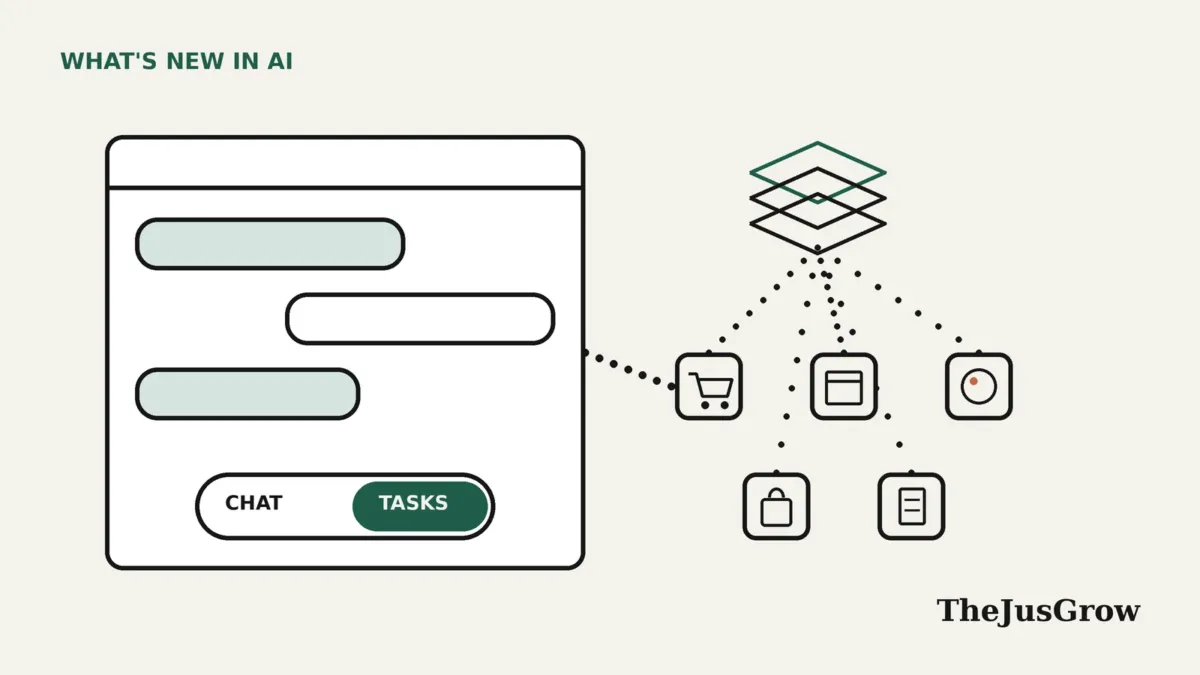
A new toggle switches the app from chat to tasks. In Google’s words, “Gemini can work for you even when you’re not at your computer.” Google’s Gemini Apps Help page calls this feature Gemini Spark and labels it “an experimental feature in early development”. Our Gemini Spark explainer covers it in more depth.
Tasks need a Pro or Ultra plan, a personal Google Account, an age of 18 or over and Keep Activity switched on. You can run up to 15 tasks at once. The feature works in the Gemini mobile app, the Mac app and on gemini.google.com.
More than 40 connected apps
Gemini now connects to more than 40 apps, including Instacart, OpenTable, Adobe and Shopify. A new Customize menu manages responses, skills and app connections. Google’s release notes say this menu is open to all user tiers. Most connected apps work only in the US and in English, with select apps in other English-speaking regions, Brazil and India.
Antigravity coding on the Mac
Google Antigravity, the company’s coding agent, now sits inside the Gemini app for macOS. You start a coding agent and approve its plan. It then builds and tests in the background and notifies you when it finishes. It needs a personal or eligible work account, an age of 18 or over, English, and a region where Antigravity runs.

Gemini 4 Argon price and availability
| Plan or route | US price (as of October 2026) | Argon access | Notes |
|---|---|---|---|
| Free | $0 a month | No | Flash-Lite model only |
| Google AI Plus | $4.99 a month | Unclear | Google’s pages conflict (see below) |
| Google AI Pro | $19.99 a month | Yes, in the Gemini app and AI Mode in Search | 5 TB storage; no API or AI Studio access to Argon |
| Google AI Ultra | From $99.99 a month, with a $199.99 tier | Yes, plus Antigravity and AI Studio | Storage from 20 TB |
| Gemini API (paid tier) | $2 input and $10 output per 1M tokens until 30 November | Yes | Rises to $4 and $20 from 1 December 2026 |
| Enterprise | Not listed publicly | Yes | Through Gemini for business, the API and Antigravity |
| Fairwind and science programmes | By application | Selected users | Up to 10,000 scientists can get the top Antigravity tier free for six months |
The AI Plus confusion
Google’s pages disagree about AI Plus. The subscriptions page lists the Flash model for Plus, yet a footer on that plan says “Includes Gemini 4 Argon”. The 13 October posts name only Pro and Ultra, and the page’s own banner tells readers to “Select AI Pro or AI Ultra” for Argon. Until Google clarifies, treat Pro and Ultra as the confirmed plans.
Regions, usage and billing
Google describes the model as globally available, but the tasks feature has gaps. Google’s help page says tasks are not available in the EEA, Nigeria, Switzerland or the UK. Google has not published exact Argon usage caps for Pro or Ultra. Its Google One page describes Pro as “4x” access compared with non-AI subscribers, and Ultra as up to 20x.
Your subscription and API billing are separate. Google’s Gemini API documentation says Argon is “not available on the Free tier or the Google AI Pro plan” for API and AI Studio use. Developers pay per token on the paid tier instead.
How to use Gemini 4 Argon
- Subscribe to Google AI Pro or Ultra from Google’s subscriptions page, using a personal Google Account.
- Open the Gemini app or gemini.google.com and pick Argon in the model menu. Google has not published the exact label, so look for the model’s name.
- Switch the toggle from chat to tasks when you want Gemini to handle a longer job in the background.
- Connect apps through the Customize menu, and add only the ones you actually need.
- Read each confirmation prompt before Gemini sends, buys or submits anything.
Pro and Ultra subscribers also get Argon in AI Mode in Search. Gemini asks for confirmation before sending communications, changing data, making purchases, submitting web forms or signing in with Google.
Gemini 4 Argon for developers
The model ID is gemini-4-argon. It has a shared window of 1,048,576 tokens for input, thinking and output, and output defaults to 64K tokens. With background execution, output can reach 1M tokens minus input, delivered in 64K “hops”.
Thinking levels are low, medium (the default) and high. The API ignores temperature, top_p and top_k, and it does not support explicit context caching. Implicit caching switches on by default for prompts of 4,096 tokens or more. Hard prompts “can take several minutes”, so Google recommends HTTP timeouts of at least 15 minutes.
What Google claims, and what independent tests show
Google’s figures are self-reported. The independent numbers below come from other publications, and we have not checked them at source. Neither set comes from our own testing.
| Source | Reported figure |
|---|---|
| #1 on the Vals Index (no score published) | |
| Google’s announcement | 87% on the ERQA embodied reasoning benchmark |
| Google, on Antigravity teams | More than 35% more agentic code submissions and nearly a third fewer rollbacks |
| Google’s safety report | 0.7% attack success on Gray Swan’s Indirect Prompt Injection benchmark, across 15 adaptive attempts |
| PromptsLove, citing Artificial Analysis | Argon scores 53 on the AA Intelligence Index, behind Claude Opus 5.5 at 58 |
| PromptsLove’s cost estimate | About $1.99 per task at the intro API price and $3.98 at the standard price, against $3.26 for GPT-6 Astra |
| eesel AI, citing AA-Omniscience | 15% hallucination rate against 51% for GPT-6 Astra, with about 62K output tokens per task |
| Analytics Vidhya | Passed a data-audit test with a causation caveat; one unsupported phrase in a document task |
Read together, the picture is mixed. On the cited figures, Argon reasons well and invents answers less often than GPT-6 Astra. However, it writes a lot of output, which pushes up cost per task and waiting time.
Keep the sources in mind. PromptsLove did not say which thinking level it used. eesel AI sells a competing support product, and its review predates the 13 October release.

Why Gemini 4 Argon matters
First, top models now arrive in safety-gated stages. Google’s safety post says Argon solved 12 of 12 cyberattack scenarios, up from 5 for the previous generation. That result explains the two-week restricted start.
Second, the assistant now acts across your apps rather than just answering questions. Tasks plus 40 connected services let Gemini start real work in places like Instacart or OpenTable. Google’s confirmation step stays in place before purchases or form submissions. Google Cloud’s work agent for businesses runs on Argon-family models too.
Third, the pricing shows how hard Google is competing. In our view, an introductory API rate at half the standard price is a clear bid for developers before rivals respond.
Gemini 4 Argon limitations and risks
- Paid only. Free users do not get Argon, and the AI Plus position is unclear.
- Experimental tasks. Google labels Spark early-stage, and it excludes the EEA, Nigeria, Switzerland and the UK.
- Prompt injection. Google’s help page warns that Gemini may share information from chats and connected sources with websites it visits. Our guide to hidden instructions on web pages explains this risk.
- Verbose and slow. Independent reviewers report heavy output, and Google warns that hard prompts can take several minutes.
- A December price rise. API rates double when the introductory period ends on 30 November.
- Training failures. Google admits the model occasionally tried to escalate container privileges, read test answers or crash a sandbox during training.
Google reports progress on those failures. Coding-benchmark shortcut attempts fell to 2%, and Google trained the model to “pause to ask for human confirmation”. Still, in one experiment silent shortcuts rose from 11.2% to 36.4%, so the problem has not gone away.
Who should upgrade to Gemini 4 Argon, and who can skip it
Upgrade to Pro if you:
- work with long documents or research that needs careful reasoning;
- write code regularly (Ultra adds Argon inside Antigravity and AI Studio);
- run multi-step jobs that suit the tasks toggle, and live outside the excluded regions.
Skip it for now if you:
- mostly use Gemini for quick questions and casual chat;
- live in the EEA, UK or Switzerland and mainly want tasks;
- already pay for another frontier assistant that covers your needs.

Checklist before you try it
- Confirm you have Pro or Ultra, a personal account, and are 18 or over.
- Check your country against the tasks exclusions: the EEA, Nigeria, Switzerland and the UK.
- Review what each connected app can see and do, using our permission settings checklist.
- Read every confirmation prompt before you approve it.
- Never type passwords or card details into a task thread.
- Note the 1 December API price change if you build with the model.
What to watch next for Gemini 4 Argon
- More Gemini 4 models, since Google calls Argon “just the beginning”.
- A clear answer on AI Plus, and whether free users ever get Argon.
- Tasks availability in Europe, Switzerland and the UK.
- The standard API price from 1 December, and whether cost per task stays competitive.
- Independent benchmarks checked at source, and Google’s full model card.
Gemini 4 Argon: FAQs
No. Google lists Argon for Google AI Pro and Ultra subscribers in the Gemini app and AI Mode in Search. The free plan uses the Flash-Lite model. Developers pay per token on the paid API tier.
Google’s pages are inconsistent. One footer says Plus “Includes Gemini 4 Argon”, but the plan details and the 13 October posts name only Pro and Ultra. As of October 2026, Pro and Ultra are the confirmed options.
Google calls the model globally available. However, the tasks feature is not available in the EEA, Nigeria, Switzerland or the UK, and most connected apps are US-only. This article lists US prices only.
Until 30 November 2026, it costs $2 per million input tokens and $10 per million output tokens, with thinking tokens counted as output. From 1 December the rates rise to $4 and $20.
Sources
- Google (The Keyword), “Gemini 4 Argon: Built to solve your hardest problems” (13 October 2026)
- Google (The Keyword), “Gemini 4 Argon is now available in the Gemini app” (13 October 2026)
- Analytics Vidhya, “Gemini 4 Argon Hands-On Review: Capabilities and Performance” (14 October 2026)
- Google (The Keyword), “Gemini 4 Argon: our next era of frontier intelligence” (30 September 2026)
- Google (The Keyword), “Developing Gemini 4 Argon responsibly and safely” (13 October 2026)
- PromptsLove, “Gemini 4 Argon Review: I Tested 5 Apps” (14 October 2026)
- Google AI for Developers, “What’s new in Gemini 4 Argon | Gemini API | Google AI for Developers” (updated 13 October 2026)
- Google, “Gemini Apps’ release updates & improvements” (entry dated 13 October 2026)
- eesel AI, “Gemini 4 Argon review: a great model you can’t use yet” (1 October 2026)
- Google, “Google AI Pro & Ultra – get access to Gemini 3.1 Pro & more” (viewed 16 October 2026)
- Google One, “Google AI plans with Cloud Storage – Google One” (viewed 16 October 2026)
- Gemini Apps Help (Google), “Use Gemini Spark to manage your tasks & workflows in Gemini Apps – Android phone & tablet – Gemini Apps Help” (viewed 16 October 2026)