What’s New in AI This Week: Cheaper Models, Smarter Agents and New Guard Rails (5–11 October 2026)
Capable AI got much cheaper this week, Google launched a work agent that runs on rival models, and new tools arrived for containing agents and checking AI media.

In this article
- The week’s AI launches at a glance
- Cheaper models: the AI launches that change the maths
- Agents: Google bets on the layer above the model
- Coding tools: faster agents, and a reality check
- Images and media: better generation, better checking
- Infrastructure: fences for agents, power on the desk
- What this week’s AI launches add up to
- Sources
This week’s AI launches in brief
The AI launches of 5–11 October 2026 pointed in one direction: capable AI is getting much cheaper, and companies are finally building fences around agents that act on our behalf. Anthropic cut the price of a capable small model by about 90%, Google launched a work agent that can run on rival models, and Microsoft and Google shipped new tools for containing agents and checking AI media.
Most weeks in AI produce a lot of announcements but very little change. This one was different. None of the AI launches below is a single dramatic breakthrough, but together they say a lot about where the industry is heading over the next year.
The short version: the cost of running a decent model keeps collapsing, the big platforms are competing to own the agent rather than the model, and, for the first time, the safety plumbing is arriving at roughly the same pace as the features.
A note on method. Every item below links to the company’s own announcement or documentation, or to a named news outlet where that’s all that exists. Where a claim comes only from the company, I’ve said so. Several of these AI launches are still previews or waitlists, so the table makes clear which.
The week’s AI launches at a glance
| Launch | Company | Date | Status on 11 October | Price (where confirmed) |
|---|---|---|---|---|
| Claude Haiku 5.5 | Anthropic | 7 Oct | Released for developers | $0.10 in / $0.50 out per million tokens (prompts under 100K) |
| Mistral Large 4 | Mistral AI | 6 Oct | Public API preview; weights promised by end of October | $1.36 in / $4.18 out per million tokens |
| Beam | Reflection AI | 5 Oct | Waitlist only; weights promised later in October | Not announced |
| Gemini agent | Google Cloud | 8 Oct | Limited business access; industry previews | Not published |
| Nano Banana 2.1 | 6 Oct | Generally available in the Gemini API | From $0.0336 per 1K image | |
| SynthID Detector | Google DeepMind | 7 Oct | Public, worldwide, English | Free |
| Execution Containers | Microsoft | 7 Oct | Generally available on Windows 11 (parts experimental) | Not stated |
| Surface Laptop Ultra | Microsoft | 7 Oct | Pre-order | Listed from $2,599.99 |
Cheaper models: the AI launches that change the maths
Claude Haiku 5.5
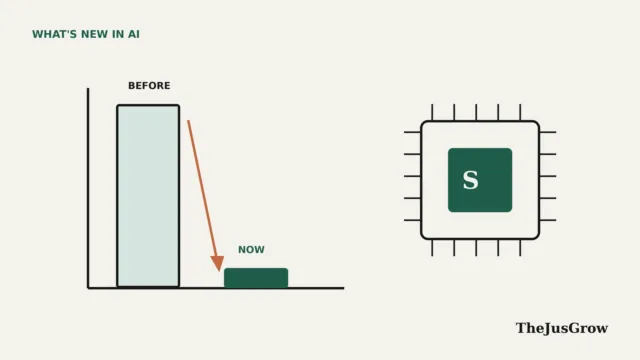
Claude Haiku 5.5 was, for me, the most consequential launch of the week, precisely because it’s the least glamorous. Anthropic’s launch page prices it at $0.10 per million input tokens and $0.50 per million output tokens for prompts under 100,000 tokens. That’s about a tenth of what Haiku 4.5 cost. Anthropic’s own benchmarks show it operating a computer far better than its predecessor, though Sonnet 5.5 still beats it on every test listed.
Small models do most of the background work in AI products, so when their price drops this far, features that were too expensive to switch on, like summarising every email or letting an agent click through websites for you, start to make financial sense. We go into the detail, including what breaks for developers upgrading, in our full piece on Claude Haiku 5.5.
Mistral Large 4 and Reflection Beam
Mistral Large 4 is the opposite kind of model: enormous. The company says it has 1 trillion parameters, of which 52 billion are active at a time, and handles images and documents as well as text. It’s in public preview on Mistral’s API, and the company promises open weights “by the end of the month” without yet naming a licence. Still, most of its headline results are Mistral’s own tests.
The reason to care is location as much as capability, because Mistral trained the model in its own European data centres and is pitching it at security, finance and legal work. European governments and regulated companies have been asking for exactly this. So whether the weights arrive on time, and on what terms, is the thing to watch.
Beam from Reflection AI is the American counterpart among this week’s open-weight AI launches. The launch post describes a 501-billion-parameter model with 23 billion active per token, aimed at coding and agent work. It’s waitlist-only while the company finishes safety testing, with weights and an Apache 2.0 licence promised later in October. Interestingly, Reflection itself says Kimi K3, from China’s Moonshot AI, is still ahead on raw capability, an unusually candid admission in a launch post.
Agents: Google bets on the layer above the model
The Gemini agent was Google Cloud’s big announcement. It puts chat, long-running tasks and coding behind one prompt box, and can work as a “coworker” with its own identity and Workspace account.
The striking detail is that it can run on Anthropic’s Claude models as well as Gemini. Kurian’s own line was “Gemini is the agent, and the model underneath it is a separate choice.” That’s Google saying the valuable thing is the agent living in your inbox, not the model inside it. However, there’s no public price or release date yet, and no consumer version. Our Gemini agent explainer covers how the coworker mode and Google’s security controls are meant to work.
Two smaller agent stories are also worth a mention. TikTok announced a Shopping Assistant and one-tap Buy Direct checkout on 5 October, both in testing with advertisers. And Sierra published the draft Personal Agent Protocol, a proposed standard for how your personal AI agent deals with businesses, adding 35 design partners including OpenAI, Visa and Mastercard. It’s still a draft; our Personal Agent Protocol explainer has the background.
Coding tools: faster agents, and a reality check
OpenAI’s changelog shows an Ultrafast mode for GPT-6.1 Sol in Codex and ChatGPT Work from 8 October, limited to the Pro $500 plan and eligible Enterprise and Edu workspaces. The Codex command-line tool also gained managed Git worktrees, which let several coding tasks run side by side without stepping on each other. Anthropic, for its part, added a beta feature to Claude Managed Agents that lets one agent run many others in phases, for jobs like reviewing hundreds of documents.
In short, one coding assistant is becoming many agents working in parallel. Yet a Harvard working paper by Fiona Chen and James Stratton is a useful counterweight to these AI launches. Studying 718 firms, they found that after adopting AI coding agents, firms produced 30% more lines of code and 23% more pull requests, but resolved no more issues than before. Meanwhile, code review time went up 49%. Writing code faster doesn’t help much if people still have to read all of it.
Images and media: better generation, better checking
Google made Nano Banana 2.1 generally available in the Gemini API on 6 October, according to its developer changelog. Google says the update improves text rendering and keeps characters consistent across multiple edits, and adds very wide and very tall panoramic formats. Its pricing page lists $0.0336 per 1K image, with no free tier for this model.
For most people, though, the more important media story was the SynthID Detector going public on 7 October. Specifically, it checks files for the hidden watermark that Google, OpenAI, NVIDIA and Kakao tools add to AI-generated content. It’s a real step forward, with one big caveat: if it finds no watermark, that tells you nothing about whether a file is genuine. Our SynthID Detector guide explains how to read the results without being misled.
By contrast, we didn’t find any major video model among this week’s AI launches that we could confirm from an official source.
Infrastructure: fences for agents, power on the desk
Microsoft Execution Containers reached general availability on Windows 11 on 7 October, as eSecurity Planet reported from Microsoft’s developer blog. They let IT teams set which files, networks and processes an AI agent may touch, enforced by the operating system rather than by the agent’s own good behaviour. Some parts, such as micro-VM containers, are still experimental.
This is overdue, because agents are starting to click, type and run code on ordinary PCs, and the operating system is the right place to draw the boundaries.
Microsoft also opened pre-orders for the Surface Laptop Ultra, listed from $2,599.99. Microsoft’s product page says it has up to 128GB of unified memory and can run local agent workflows on models up to 120 billion parameters. Separately, TweakTown reported that shipping starts on 16 October. Running models locally keeps data on your own machine, which matters for privacy, although at this price it’s a professional tool rather than a consumer one.
Deeper in the data centre, Upscale AI announced Token Fabric, networking meant to let AI chips from different makers work together in one cluster. Network World reports early access now and general availability planned for early 2027.
What this week’s AI launches add up to
Three threads ran through the week’s AI launches.
Intelligence is getting cheap. Haiku 5.5 is the clearest example, but the open-weight releases promised by Mistral and Reflection point the same way. As a result, cheap models mean more AI running quietly in the background of everyday apps.
The fight is moving up a layer. Google letting Claude power its own agent says the battle is now over who owns the agent and the workflow, not who has the best model this month.
Guard rails are finally keeping pace. Execution Containers, the SynthID Detector and the identity controls in Google’s agent all tackle the same question: how do we trust AI that acts and creates on our behalf?
Next week, then, I’ll be watching for the Mistral and Reflection weights, any price or date for Google’s agent, and independent tests of Haiku 5.5’s computer-use claims.
Sources
- Anthropic, “Claude Haiku 5.5” (7 October 2026)
- Mistral AI, “Mistral Large 4” (6 October 2026)
- Reflection AI, “Introducing Beam” (5 October 2026)
- Google Cloud Blog, Thomas Kurian, “Welcome to Gemini at Work 2026” (8 October 2026)
- TikTok Newsroom, “TikTok Unveils AI-Powered Updates for Advertisers” (5 October 2026)
- Sierra, Personal Agent Protocol draft announcement (9 October 2026)
- OpenAI, “ChatGPT and Codex changelog”, entries for 7–9 October 2026
- Fiona Chen and James Stratton, “Artificial Intelligence in the Firm: Bottlenecks in Software Production” (working paper, August 2026 version)
- Gemini API release notes, entry for 6 October 2026
- Gemini API pricing (accessed October 2026)
- Google DeepMind, “Google expands SynthID Detector for AI content” (7 October 2026)
- eSecurity Planet, “Microsoft Execution Containers for AI Agents Reach GA on Windows 11” (9 October 2026)
- Microsoft, “Surface Laptop Ultra” product page (accessed October 2026)
- TweakTown, “Microsoft opens Surface Laptop Ultra preorders at $2,599” (7 October 2026)
- Network World, “Upscale takes on AI networking silos with Token Fabric” (8 October 2026)