AI Agent for Amazon Sellers: What It Can Do and How to Stay in Control
Amazon’s Seller Assistant can now monitor, recommend and act for sellers, including inside Claude. Here is what it does, how to set it up and how to keep control.

In this article
- What can an AI agent for Amazon sellers actually do today?
- Which AI agent tools has Amazon built for sellers?
- How does Amazon’s agent compare with ChatGPT, Gemini or Copilot?
- How do Amazon sellers set up the AI agent in Claude?
- Five jobs Amazon sellers can give an AI agent
- What are the permission and data risks for Amazon sellers?
- What does an AI agent for Amazon sellers cost?
- Who should use an AI agent for Amazon sellers, and who should skip it?
- A checklist before you switch it on
- AI agent for Amazon sellers: FAQs
- Sources
AI agent for Amazon sellers: the short answer
An AI agent for Amazon sellers reads your Seller Central data and, with your approval, acts on it: fixing listings, flagging stockouts, drafting restock plans and reporting on sales. As of October 2026, Amazon’s own Seller Assistant does this inside Seller Central, and a new plugin brings it to Amazon Quick and, in a US-only beta, to Claude.
Running a small Amazon store means dozens of small checks a week. Is a listing suppressed? Will a best-seller run out? An AI agent for Amazon sellers promises to watch those things and to act when you say so. This guide explains what Amazon offers, how general chatbots fit in, and where the risks sit.
It draws on Amazon’s own documentation, checked in October 2026, so expect beta details to change.
What can an AI agent for Amazon sellers actually do today?
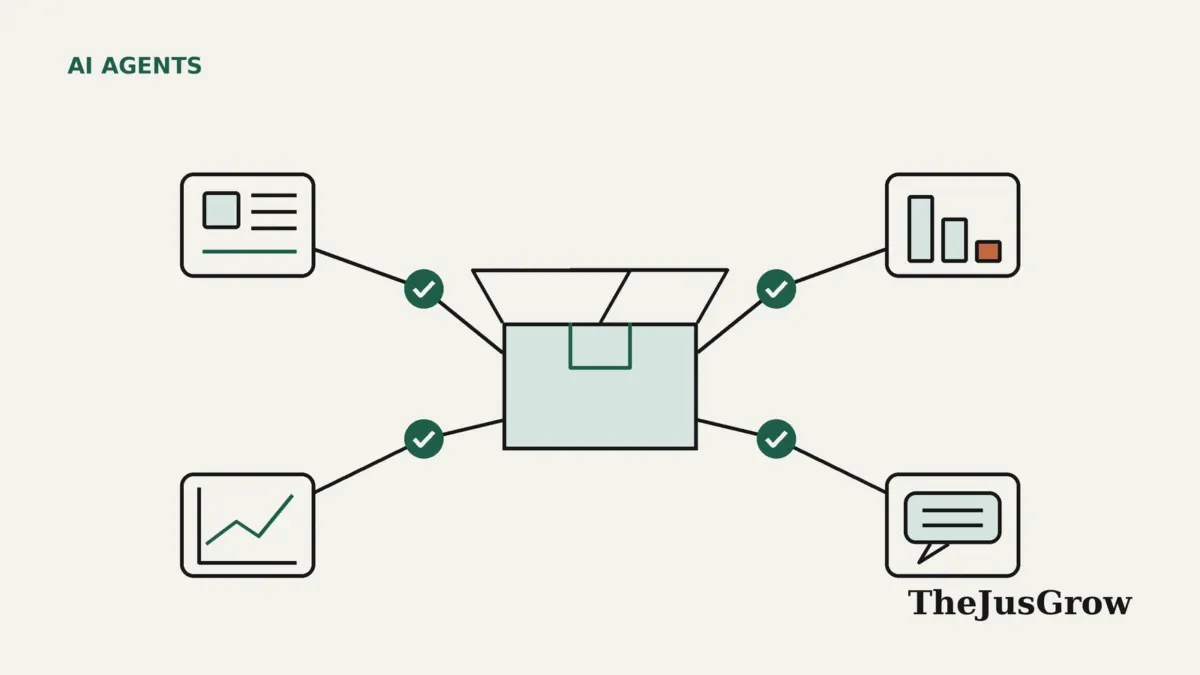
An agent differs from a chatbot because it can use tools. In this case, the tools are Amazon’s seller systems. Amazon describes its plugin as connecting “listing contributions, real-time performance metrics, inventory levels, and sales analytics” to an AI assistant. It also says the assistant can act on the account, much as Seller Assistant does inside Seller Central.
In practice, the documented jobs for an AI agent serving Amazon sellers fall into a few groups:
- Listings: spotting suppressed or incomplete listings and proposing fixes to titles, attributes and other fields.
- Inventory: flagging slow-moving stock before long-term storage fees, and warning about products likely to run out.
- Shipments: preparing restock and shipment recommendations based on demand, according to TechCrunch’s report on the 2025 launch.
- Monitoring and pricing: background alerts, such as a top product dropping below four stars, and suggested price changes.
However, an agent only knows what it can see. Nova Analytics, a seller-tools company, notes that the plugin does not hold your cost of goods, freight or duties.
Which AI agent tools has Amazon built for sellers?
Amazon now runs several overlapping AI tools of its own.
Seller Assistant inside Seller Central
Seller Assistant is Amazon’s built-in AI agent for sellers. In September 2025, Amazon gave it agentic features. TechCrunch reported that it can flag slow-moving products and recommend keeping, repricing or removing them. It also prepares shipment recommendations and flags possible compliance problems. Amazon said it acts “with permission” and that sellers keep the final decision.
In September 2026, Amazon added memory of each seller’s pricing patterns and inventory cycles, plus workflows that keep running while you are offline. Templates cover account health, order summaries, pricing trends and expansion ideas.
The Selling Partner plugin for Amazon sellers using AI agent tools
On 23 September 2026, Amazon announced a Selling Partner plugin that brings Seller Assistant into outside AI tools. It launched first in Amazon Quick, Amazon’s own workplace AI app. In Claude, it is a beta for sellers in Amazon’s US stores, and Amazon says international expansion will follow. Amazon plans to add more AI platforms and chooses which ones qualify.
Listing and advertising tools
Amazon’s AI information page also lists Enhance My Listing, an A+ Content Generator and an AI Video Ad Creator. For ads, Amazon announced Ads Agent in November 2025, a chat tool that drafts campaigns.
How does Amazon’s agent compare with ChatGPT, Gemini or Copilot?
General assistants can work as an AI agent for Amazon sellers, but only with a connection to your data.
| Route | Who builds it | What it can do | Status as of October 2026 |
|---|---|---|---|
| Seller Assistant in Seller Central | Amazon | Also monitors, recommends and acts with your approval | Live; Amazon says workflows cost nothing extra |
| Selling Partner plugin | Amazon | Similarly reads data and proposes actions in Quick or Claude | Quick first; Claude beta for US stores |
| Amazon Ads MCP server | Amazon Ads | Then creates, updates or deletes campaigns and runs reports | Open beta for Ads partners with active API credentials |
| Third-party MCP connectors | Independent vendors | However, scope varies; check each vendor’s docs | Company claims only |
Amazon names only Quick and Claude for the seller plugin, and none of its pages we checked mention ChatGPT, Gemini or Copilot for seller data. By contrast, the Amazon Ads MCP server names Claude, ChatGPT and Gemini as examples. Other routes use third-party servers built on the Model Context Protocol. For example, Seller Labs says its server works with Claude Pro or higher, or ChatGPT Business or higher. Treat such statements as company claims.
How do Amazon sellers set up the AI agent in Claude?
The steps below show how Amazon sellers connect the AI agent in Claude. Amazon says the connection takes “roughly 60 seconds”. Seller Labs, a competitor, says Claude beta access opens in waves from a waitlist.
- First, in Claude, open Customize, then Connectors, or use the + menu in a chat.
- Next, find Amazon Selling Partner. The listing says Amazon built it, Anthropic verified it, and it is in beta.
- Then click Connect, sign in with Amazon and read the consent screen.
- After that, check settings; the listing shows separate read-only and write tools.
- Finally, switch the connector on in a chat and start with a read-only question.
On Claude Team and Enterprise plans, an owner must add the connector first. According to Claude’s help centre, owners can also set each tool to “Always allow”, “Needs approval” or “Blocked”. Neither Amazon nor Anthropic states which Claude plan the Amazon connector needs, so check your account.
Five jobs Amazon sellers can give an AI agent
Amazon sellers should start every AI agent job in draft mode. Ask for a plan, read it, then approve one change at a time.
1. Fix a suppressed or incomplete listing
Ask the agent for inactive or suppressed items and Amazon’s stated reason, then a field-by-field fix before it writes anything.
List my suppressed or inactive listings with the issue Amazon reports for each. Propose fixes, but do not change anything until I approve each one.
2. Check stockout risk
Next, ask for days of cover on top sellers, counting stock already on its way, with forecasts labelled as such.
3. Plan an FBA inbound shipment
Amazon’s Fulfillment Inbound API runs in stages: create a plan, then choose packing, placement, transportation and a delivery window. Each choice can change cost, so ask the agent to stop at every stage and show you the options.
4. Diagnose a sales drop
Similarly, ask it to compare traffic, conversion, price and stock before and after the drop, citing evidence.
5. Ad reports and customer messages
The Amazon Ads MCP server can also delete campaigns, so use it for reports at first. For buyer messages, ask for drafts and send them yourself. Our guide to AI agents for customer support covers that review step.
What are the permission and data risks for Amazon sellers?
An AI agent for Amazon sellers can touch prices, listings and spend. That makes permissions the most important setting. Three principles help.
- Least privilege: Amazon’s developer platform splits access into roles such as Product Listing, Pricing, Amazon Fulfillment and Buyer Communication. Grant only what a job needs.
- Approval before action: Amazon says workflows can be set to recommend only, and that actions are reviewed before they run. Keep pricing, listing edits and ad spend behind that gate.
- Audit and revoke: Amazon says every action is logged. Also check the log weekly and disconnect tools you no longer use.
Prompt injection is a further risk for any AI agent that Amazon sellers connect. Agents read text written by strangers, such as reviews, buyer messages and competitor listings. Hidden instructions in that text could try to steer the agent. Our explainer on prompt injection shows how this works.
Amazon says Seller Assistant keeps seller data within its infrastructure, but your Claude settings also apply to results shown in Claude. For developers, Amazon’s security overview requires a 24-hour incident notification plan and a 30-day deletion rule for personal data. Ask any third-party vendor how it meets those rules. Our guide to AI agent permission settings has more.
What does an AI agent for Amazon sellers cost?
As of October 2026, Amazon lists the Professional selling plan at $39.99 a month plus selling fees, and the Individual plan at $0.99 per item sold. Referral fees for most categories fall between 8% and 15%, according to the same page.
For Amazon sellers, the built-in AI agent workflows come at no additional cost, Amazon says. Every primary account holder can claim 12 months of Amazon Quick Plus free by 31 December 2026, plus two co-workers. Amazon has not said what Quick Plus costs afterwards, or what Claude plan the connector needs. For third-party tools, our guide to AI agent pricing explains the usual models.
Who should use an AI agent for Amazon sellers, and who should skip it?
An AI agent suits Amazon sellers in the US with a Professional account and repetitive checks across many products. It also suits owners who can judge a proposed change quickly.
Others should wait. That includes sellers outside the US who want the Claude route, anyone in a regulated category where a wrong claim could cause trouble, and anyone without time to read approval prompts. If your shop also runs elsewhere, compare our Shopify agent guide first.
A checklist before you switch it on
- Confirm who on your account can authorise outside tools, and use your own login.
- Start read-only, then set any workflow that changes prices, listings or spend to recommend only.
- Write down price floors and ceilings, and give them to the agent as guardrails.
- Also review the audit trail each week.
- Never paste buyer addresses or payment details into a chat.
Key takeaways
- Amazon’s own Seller Assistant is the main AI agent for Amazon sellers, and it acts only with approval.
- Since September 2026, a Selling Partner plugin brings it to Amazon Quick and, in a US beta, to Claude.
- General chatbots need a connector; otherwise they only see files you upload.
- Because agents can change prices and spend, keep risky actions on recommend-only.
- Finally, treat third-party tool claims as marketing until you have read their documentation.
AI agent for Amazon sellers: FAQs
Yes. Seller Assistant in Seller Central gained agentic features in September 2025. Amazon says it monitors your account, makes recommendations and takes actions only after you approve them.
Not through Amazon’s seller plugin as of October 2026, which covers Amazon Quick and, in beta, Claude. Some third-party connectors say they support ChatGPT.
Amazon says you choose whether each workflow only recommends or also acts, and that you approve actions first. Keep pricing on recommend-only at the start.
Amazon does not say the plugin requires it. The Professional plan costs $39.99 a month plus selling fees, according to Amazon in October 2026.
Sources
- About Amazon, “Amazon gives sellers an even smarter Seller Assistant and a new plugin for Amazon Quick and Anthropic’s Claude” (23 September 2026)
- Claude, “Amazon Selling Partner” connector listing (added September 2026)
- Sell on Amazon, “AI Information” (last updated August 2026)
- Claude Help Center, “Use connectors to extend Claude’s capabilities” (accessed October 2026)
- TechCrunch, “Amazon launches AI agent to help sellers complete tasks and manage their businesses” (17 September 2025)
- Amazon Selling Partners, “Amazon Accelerate 2025: A new era of tools and technology for independent sellers” (18 September 2025)
- Selling Partner API docs, “Role Mappings for SP-API Operations” (accessed October 2026)
- Amazon Ads, “Introducing the Amazon Ads MCP Server” (2 February 2026)
- SP-API docs, “SP-API Security and Compliance Overview” (9 September 2026)
- Amazon Ads, “unBoxed 2025: Simplifying advertising through innovation” (11 November 2025)
- Selling Partner API docs, “Fulfillment Inbound API” (9 September 2026)
- Seller Labs, “Amazon Put Its AI in Claude for Free. Did It Just Kill Seller Labs?” (29 September 2026)
- Nova Analytics, “Amazon Accelerate 2026: Seller Assistant comes to Claude and Amazon Quick” (25 September 2026)